

 English
 中文简体
中文简体 русский
 Español

Industry News
 +86-13306862930 / +86-18668881826
Get a Quote
+86-13306862930 / +86-18668881826
A Gear And Rack Factory specializes in the production of gears and rack components used in mechanical transmission systems. These components are widely applied in automation equipment, industrial machinery, and motion control systems. A Gear And Rack Factory integrates machining, heat treatment, finishing, and inspection processes to produce components that meet dimensional and performance requirements across different applications.
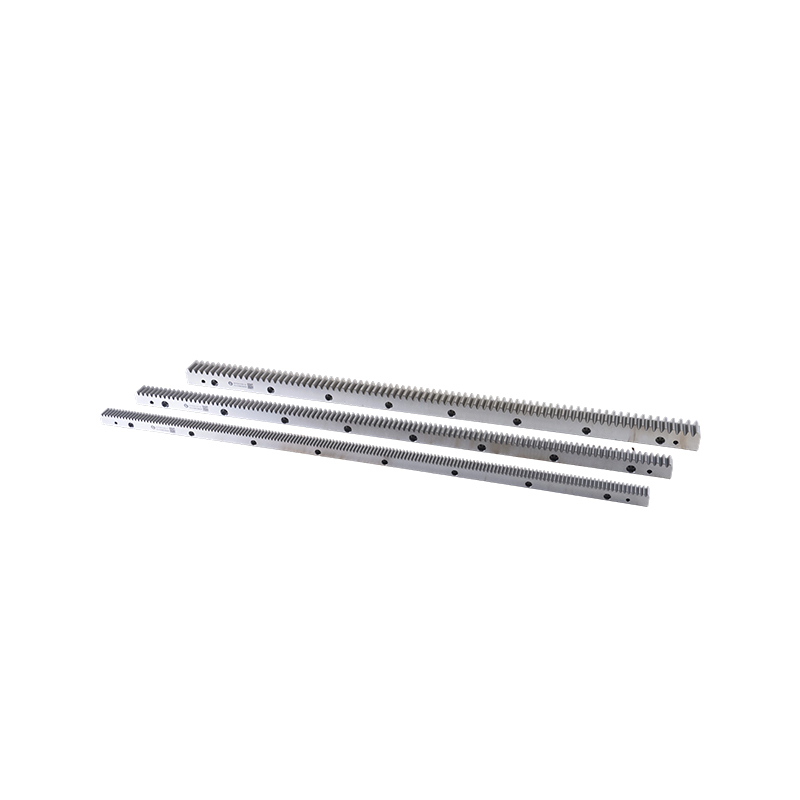
In a Gear And Rack Factory, material selection is a foundational step that influences strength, wear resistance, and service life. Common materials include carbon steel, alloy steel, and stainless steel, depending on application needs. A Gear And Rack Factory evaluates raw material properties such as hardness, tensile strength, and machinability before processing. Proper material preparation helps ensure stable performance during cutting and shaping operations.
Designing components in a Gear And Rack Factory involves calculating tooth profiles, module sizes, pressure angles, and load capacity. Gears and racks must be matched accurately to achieve smooth motion transfer. A Gear And Rack Factory uses engineering principles and design tools to determine appropriate specifications based on torque, speed, and application environment. Proper alignment between gear and rack is essential for efficient operation in mechanical systems.
The production process in a Gear And Rack Factory includes multiple machining stages such as hobbing, shaping, milling, and grinding. Gear teeth are formed with high precision to ensure proper meshing with racks. A Gear And Rack Factory may use CNC equipment to maintain accuracy and repeatability. Rack components are typically processed through milling or grinding to achieve straightness and consistent tooth spacing. Each step contributes to the overall quality of the final product.
Heat treatment is an important step in a Gear And Rack Factory to enhance mechanical properties. Processes such as carburizing, quenching, and tempering are applied to improve hardness and wear resistance. A Gear And Rack Factory controls temperature and timing parameters to achieve desired material characteristics. Surface hardening helps extend the lifespan of gears and racks, especially in high-load or high-friction environments.
A Gear And Rack Factory produces components designed for compatibility with various mechanical systems. Gear and rack combinations are used to convert rotational motion into linear motion. Applications include CNC machines, automation equipment, steering systems, and lifting mechanisms. A Gear And Rack Factory ensures that tooth profiles and spacing align correctly to support smooth engagement and consistent motion transfer.
Quality control plays a key role in a Gear And Rack Factory. Inspection processes include dimensional measurement, surface roughness testing, and hardness evaluation. A Gear And Rack Factory checks tooth accuracy, pitch consistency, and alignment to ensure proper meshing performance. Advanced measuring instruments and gauges are used to verify that each component meets specified tolerances before delivery.
After production and inspection, a Gear And Rack Factory organizes packaging to protect components during storage and transportation. Protective coatings, wrapping materials, and secure packaging methods are used to prevent damage and corrosion. A Gear And Rack Factory coordinates shipment according to order requirements, ensuring components arrive in proper condition for installation and use.
For more information on Gear And Rack Factory, visit our product page and learn how this innovative technology can support your mechanical transmission and motion control requirements.

© 2025 Zhejiang Yuchen Transmission Technology Co., Ltd.

Transmission Gear And Rack


