+86-13306862930 / +86-18668881826

Get a Quote
+86-13306862930 / +86-18668881826
Every machine that moves something heavy in a straight line likely relies on a simple but brilliant concept. A rotating pinion engages a linear rack, converting circular motion into precise back-and-forth travel. A rack and pinion rack manufacturer produces the toothed bars forming half of this partnership. These components range from tiny racks guiding medical devices to massive versions moving bridge sections weighing tons. The manufacturing process transforms raw steel into precision components tolerances measured in microns.
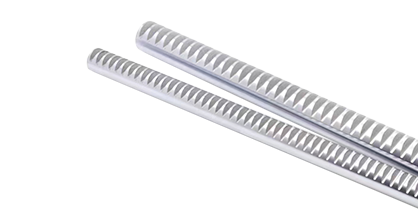
Steel arrives at manufacturing facilities in long bars requiring careful verification before production begins. Metallurgists test samples confirming chemical compositions match specifications exactly. Surface inspections detect flaws that would worsen during machining. Some alloys arrive pre-treated while others await heat treatment after initial cutting. A quality-focused rack and pinion rack manufacturer maintains strict material traceability, knowing hidden defects cause premature failures in demanding applications.
Massive gear hobbing machines remove material forming tooth profiles along bar lengths. Specialized cutters shaped to exact tooth geometries rotate against workpieces, generating accurate forms through precisely controlled movements. Some operations use rack milling machines designed specifically for this application, cutting multiple teeth simultaneously for efficiency. A productive rack and pinion rack manufacturer selects cutting methods matching production volumes, from one-off custom lengths to high-volume standard sizes.
Raw steel after cutting lacks the durability needed for heavy service. Heat treatment furnaces raise components to specific temperatures before quenching in oil or polymer solutions. This process hardens surfaces while maintaining tough cores capable of absorbing shock loads. Tempering follows, balancing hardness against brittleness for optimal performance. A thorough rack and pinion rack manufacturer monitors furnace conditions continuously, documenting every batch for quality traceability.
Heat treatment inevitably causes slight distortion requiring correction through grinding. Specialized grinding machines pass abrasive wheels along tooth flanks, removing microscopic material to restore accuracy. This process creates smooth surfaces reducing friction during operation while achieving final dimensions within tight tolerances. A precision rack and pinion rack manufacturer invests in grinding equipment capable of maintaining accuracy across racks measuring many meters in length.
Different applications demand different tooth geometries for optimal performance. Standard involute profiles suit general purpose use where moderate loads prevail. Modified designs optimize contact patterns for specific operating conditions. Helical versions offer smoother engagement for high-speed applications. A versatile rack and pinion rack manufacturer offers profile options matching varied customer requirements across industries from machine tools to heavy construction equipment.
Every rack undergoes verification before shipment reaches customers. Coordinate measuring machines probe tooth forms, comparing actual dimensions against design specifications. Surface roughness testers confirm grinding quality meets requirements. Magnetic particle inspection reveals hidden cracks invisible to visual examination. A thorough rack and pinion rack manufacturer maintains inspection records traceable to each production batch for quality documentation purposes.
Racks require attachment to machine structures through various methods. Some designs incorporate mounting holes drilled at precise intervals matching customer specifications. Others feature precision-ground reference edges simplifying alignment during installation. Keyways or dowel pin locations ensure repeatable positioning. A thoughtful rack and pinion rack manufacturer integrates mounting features matching how customers actually install products in their equipment.
Many applications require rack lengths exceeding manufacturing capabilities or practical handling limits. Joining multiple sections end-to-end creates continuous travel paths potentially reaching hundreds of meters. Special alignment fixtures ensure perfect pitch matching across joints, preventing binding as pinions transition between sections. Some manufacturers offer matched sets machined together guaranteeing compatibility. A experienced rack and pinion rack manufacturer provides joining solutions maintaining accuracy across extended travel lengths.

© 2025 Zhejiang Yuchen Transmission Technology Co., Ltd.

Transmission Gear And Rack



 English
 中文简体
中文简体 русский
 Español