+86-13306862930 / +86-18668881826

Get a Quote
+86-13306862930 / +86-18668881826
Imagine gear teeth cut at an angle rather than straight across. That simple change defines a helical ground rack, a component transforming how machines achieve precise linear movement. Unlike straight teeth engaging abruptly, helical teeth contact gradually, sliding into mesh rather than slamming together. This fundamental geometry difference creates operational benefits impossible with traditional straight-cut designs. Engineers specify these components when applications demand smoothness, quiet operation, and higher load capacity than straight alternatives can provide in demanding industrial environments.
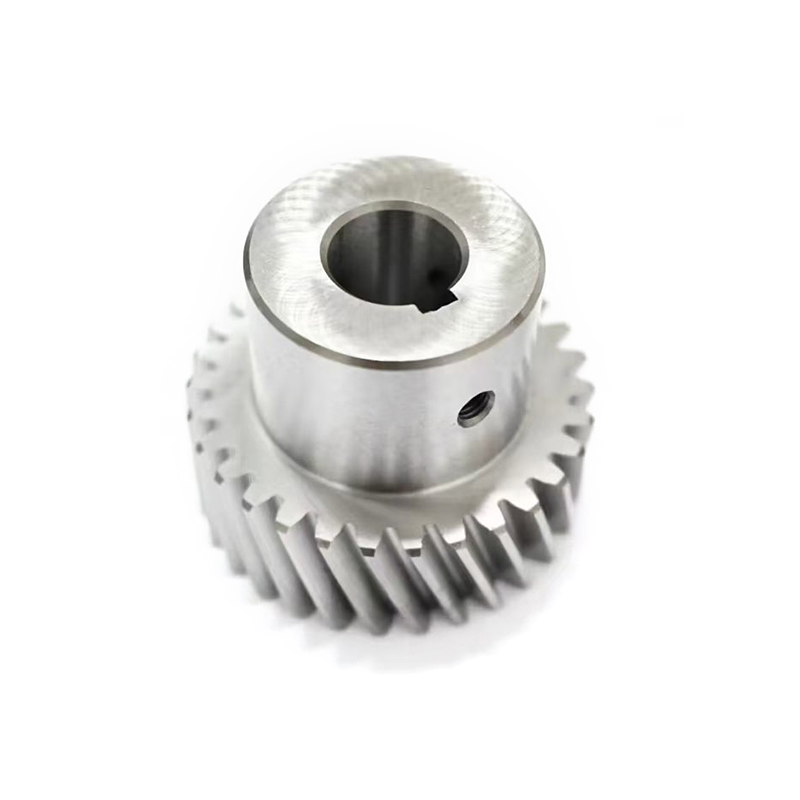
The angled teeth create continuous contact between multiple teeth simultaneously. A straight rack typically engages one tooth at a time, transferring load through single points that concentrate stress. A helical ground rack maintains contact across multiple teeth throughout movement, distributing forces more evenly across the entire tooth surface. This higher contact ratio means individual teeth experience lower stress while the system handles greater loads without premature wear. The gradual engagement also eliminates the momentary disengagement between teeth that causes vibration in straight designs, creating smoother motion.
Machine operators immediately notice the acoustic difference when helical racks replace straight versions. The sliding tooth action produces continuous smooth motion rather than the impact sounds characteristic of straight engagement where teeth meet abruptly. Applications requiring quiet operation near workers benefit significantly from this characteristic. A helical ground rack operating at high speeds remains remarkably quiet compared to straight alternatives generating increasing noise as velocity rises during production cycles. This acoustic advantage alone justifies selection for many automation applications where worker comfort matters.
The longer tooth length inherent in helical designs increases the effective contact area between rack and pinion significantly. This geometric advantage allows helical ground rack systems to transmit substantially higher torque than equivalent straight racks occupying the same physical space. For machine designers working within tight space constraints, this increased capacity enables smaller component selection while maintaining required performance levels. The improved power density proves valuable in compact automation cells where space comes at premium and every millimeter matters.
Producing helical racks demands sophisticated grinding equipment capable of maintaining accurate helix angles across entire lengths. Modern CNC grinding machines handle this effectively, making helical ground rack production as straightforward as straight versions when properly equipped. The grinding process after heat treatment corrects any distortion from hardening while creating smooth tooth surfaces that reduce friction during operation. Quality manufacturers achieve precision grades suitable for demanding applications, ensuring consistent performance across long travel distances measured in meters.
Helical racks intended for rigorous service receive heat treatment before final grinding operations. Case hardening creates wear-resistant surfaces while maintaining tough cores capable of absorbing shock loads without fracture. A properly processed helical ground rack achieves surface hardness providing extended service life in demanding applications such as heavy machinery and continuous production lines. The post-hardening grinding restores geometric accuracy while preserving the beneficial surface properties created during carefully controlled heat treatment processes.
Manufacturers offer helical racks in various materials matching specific application requirements. Alloy steels provide excellent strength for heavy industrial use where loads reach maximum levels. Stainless steel versions resist corrosion in food processing or medical environments requiring frequent washdowns with harsh cleaning agents. Carbon steel options deliver economical performance for less demanding applications where budget constraints guide selection. A well-specified helical ground rack matches material properties to operating conditions, ensuring adequate service life.

© 2025 Zhejiang Yuchen Transmission Technology Co., Ltd.

Transmission Gear And Rack



 English
 中文简体
中文简体 русский
 Español