+86-13306862930 / +86-18668881826

Get a Quote
+86-13306862930 / +86-18668881826
Imagine a steel bar with teeth cut along its length, designed to mesh with a rotating gear to create straight-line movement. Now imagine those teeth finished to microscopic precision through grinding processes. That is a ground gear rack, a component found in countless machines where accurate positioning matters. Unlike standard cut racks, these receive additional finishing after initial tooth formation, creating surfaces that mate with pinions smoothly while handling heavy loads without premature wear.
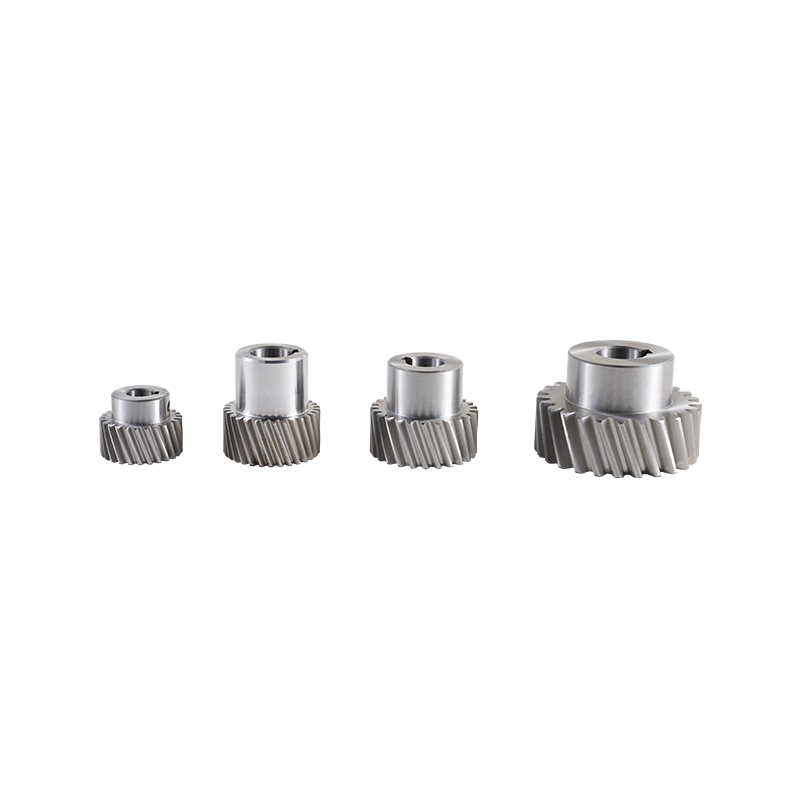
Grinding represents the final manufacturing step separating ordinary racks from precision components. Specialized grinding machines pass abrasive wheels along tooth flanks, removing microscopic amounts of material to achieve exact dimensions. This process eliminates tiny irregularities left by previous machining operations. A quality ground gear rack undergoes grinding after heat treatment, correcting any distortion caused by hardening while creating smooth surfaces that reduce friction during operation.
Racks destined for grinding typically receive heat treatment before final finishing. Hardening processes increase surface durability, allowing teeth to resist wear from repeated engagement with pinions. However, heating and quenching inevitably cause slight dimensional changes. Grinding after heat treatment restores accuracy while maintaining hardened surfaces. This sequence makes a properly manufactured ground gear rack both durable and precise, suitable for applications where replacement would cause costly downtime.
Manufacturers select materials based on specific application requirements. Alloy steels like 42CrMo4 provide excellent core strength with hardenable surfaces for heavy-duty industrial use. Carbon steels offer economical options for less demanding environments. Stainless steel versions resist corrosion in food processing or medical applications where washdowns occur regularly. A well-specified ground gear rack matches material properties to operating conditions, ensuring adequate service life without unnecessary expense.
Straight teeth provide simplicity and economy for many linear motion applications. The teeth run perpendicular to the rack length, engaging with standard spur gears effectively. Helical teeth angle across the rack face, creating smoother engagement with multiple teeth in contact simultaneously. This reduces noise and vibration while increasing load capacity. A thoughtfully designed ground gear rack incorporates tooth geometry matching specific motion control requirements, whether high speed, heavy load, or precise positioning.
Ground racks achieve accuracy levels impossible with cutting alone. DIN standards classify precision grades, with ground versions typically reaching class 5 or 6 where cumulative pitch error measures fractions of a millimeter over meter lengths. Adjacent tooth errors shrink to mere microns, ensuring smooth motion as pinions transition between teeth. A high-accuracy ground gear rack maintains positioning repeatability essential for CNC machine tools, measuring equipment, and automated assembly systems.
Proper installation determines how effectively precision translates to machine performance. Mounting surfaces must be flat and straight, allowing racks to align perfectly with travel paths. Multiple rack sections joined end-to-end require careful alignment maintaining pitch continuity across joints. Some designs incorporate integral mounting holes or precision-ground reference edges simplifying installation. A correctly mounted ground gear rack performs as designed, while poor installation negates manufacturing accuracy completely.
CNC machine tools rely on ground racks for gantry movements, positioning cutting heads with repeatable accuracy across large work envelopes. Laser cutting systems use them for high-speed motion where smooth operation prevents beam disruption. Automation lines incorporate racks in transfer systems moving products between stations precisely. Heavy machinery applications include adjustable fixtures and positioning systems where manual adjustment would prove impractical. Each ground gear rack application demands specific combinations of accuracy, load capacity, and durability.

© 2025 Zhejiang Yuchen Transmission Technology Co., Ltd.

Transmission Gear And Rack



 English
 中文简体
中文简体 русский
 Español