

 English
 中文简体
中文简体 русский
 Español

Industry News
 +86-13306862930 / +86-18668881826
Get a Quote
+86-13306862930 / +86-18668881826
Helical gear rack and pinion systems do not behave the same once the material changes. Even when the geometry stays identical, tooth contact feels different during motion. Some setups run quiet and steady, while others develop vibration or uneven wear after a period of use. Most of that difference comes from material behavior under load, speed, and surrounding conditions.
In real mechanical work, material is not only a "strength choice". It directly affects how two surfaces touch, slide, and separate during motion. A rack and pinion pair depends on continuous engagement. Once that engagement becomes unstable, the whole movement feels rough.
Three working conditions usually shape material decisions:
Dust, humidity, lubrication state, and temperature all slowly influence how material reacts over time.
Helical contact adds another layer. The angled tooth line creates smoother engagement than straight racks, yet it also spreads contact over a longer path. That means material consistency becomes more noticeable during long operation.
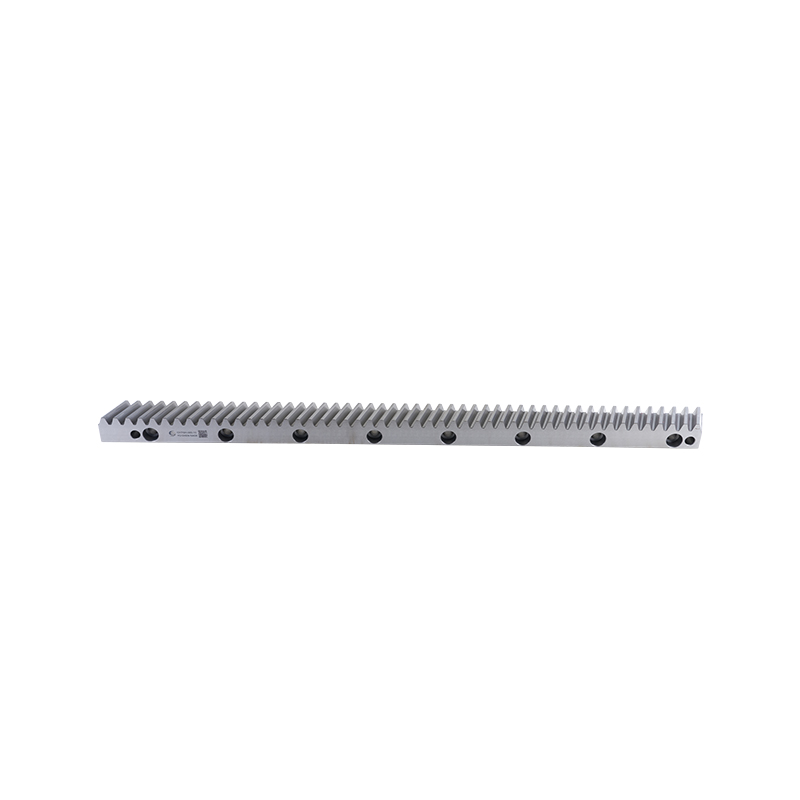
High-load motion systems often rely on steels because of their stable structure under repeated stress. Carbon steel and alloy steel appear frequently because they can be shaped, treated, and adjusted for different working needs.
Carbon steel types such as C45, EN8, or SAE1045 are often used where load is steady and operation is continuous. After heat treatment, the surface becomes harder while the inner structure keeps toughness. That balance helps the teeth resist gradual wear without becoming too brittle.
Alloy steels such as SAE8620 or EN24 behave differently. Internal composition allows better response under shock or sudden load change. In real operation, that matters when machines start, stop, or reverse direction frequently. The surface is usually carburized, then finished with grinding to improve tooth contact smoothness.
A simple comparison helps show how selection changes behavior:
| Material type | Load behavior | Surface condition | Typical use |
|---|---|---|---|
| Carbon steel | steady load handling | hardened outer layer | general drive systems |
| Alloy steel | shock + variable load | carburized + ground finish | precision motion systems |
| Hardened surface steel | repeated contact wear resistance | deep hardened layer | high-cycle engagement systems |
In real machines, material choice is often less about "strength level" and more about how motion changes during daily use.
Carbon steel stays common because it behaves in a predictable way during long operation. When load is applied repeatedly, deformation stays controlled after proper treatment. That stability makes it suitable for rack and pinion systems that run continuously.
Another practical reason is machining behavior. Carbon steel is easier to shape into precise tooth profiles. That matters because helical gears require consistent geometry along the full engagement path.
After heat treatment, surface hardness improves. Wear slows down, especially in systems where lubrication is maintained. The inner structure still keeps toughness, which prevents sudden cracking under load.
In real workshop conditions, carbon steel systems often show a gradual wear pattern instead of sudden failure. That makes inspection and maintenance easier to manage.
Still, surface wear cannot be avoided completely. Contact zones slowly polish over time. Without lubrication or alignment control, wear becomes uneven.
Alloy steel adds more control over internal structure. Small changes in composition allow better response when load shifts quickly. That becomes useful in systems where motion is not always steady.
SAE8620 and EN24 are often used when surface hardness and inner toughness both matter. After carburizing, the outer layer becomes resistant to wear, while the inner core keeps flexibility.
That combination helps in helical gear rack and pinion systems where tooth contact is not constant in one direction. Instead, contact moves along angled surfaces, creating varying pressure zones.
In practice, alloy steel systems tend to show:
Grinding after heat treatment also improves surface finish. That reduces friction during meshing, which helps motion feel more controlled and less noisy.
Even small improvements in surface finish can change how gear systems behave after long use.
Stainless steel is selected more for environment than load capacity. In places where moisture, cleaning agents, or chemical exposure exist, corrosion becomes a bigger concern than mechanical strength alone.
Grades such as 303 and 304 are often used where general corrosion resistance is enough. 316 is used when exposure conditions are more aggressive, such as frequent washing or chemical contact.
In rack and pinion systems, stainless steel helps maintain surface stability when rust formation would normally affect motion quality.
Typical behavior includes:
However, under heavy load, stainless steel may show faster wear compared with alloy steel. That is why it is often chosen for moderate-load or environment-sensitive systems rather than high-force drive systems.
Plastic materials appear in systems where load stays low and noise control matters. Nylon and acetal are commonly used because they reduce friction without requiring heavy lubrication.
In real use, plastic racks often feel smoother in light-duty motion systems. Noise levels stay low, which helps in enclosed environments.
Reinforced plastics with fibers can improve stiffness, though deformation limits still exist. Long-term heavy load may slowly change tooth shape.
Plastic systems usually fit:
Their behavior is less about strength and more about smooth, quiet motion.
Cast iron appears in motion systems where vibration control matters more than weight or high precision. In helical gear rack and pinion setups, the material behaves in a very particular way. Instead of transmitting vibration directly through the structure, part of that energy gets absorbed inside the material itself.
That damping behavior changes how the system feels during operation. Motion does not always become faster or stronger, yet it often becomes calmer. Noise level drops in many medium-speed applications, especially where long continuous running is required.
In real workshop environments, cast iron parts are usually noticed by their steady sound pattern. Even when load changes slightly, vibration does not jump sharply through the system.
Still, limitations exist in practical use:
For that reason, cast iron tends to appear in systems where stability and vibration control matter more than compact design or high-speed response.
Speed and load do not act separately in helical gear rack and pinion systems. They combine and slowly shape how surfaces wear and interact.
At low speed, contact between gear teeth happens gently. Wear develops slowly and evenly. Surface condition changes gradually, often over long cycles of use.
At higher speed, tooth engagement happens more frequently. Even when load is not extremely high, repeated contact increases surface friction. That creates faster polishing of contact zones and may gradually change meshing feel.
Load adds another layer. Light load systems allow more material options, including plastics and lighter metals. Medium load systems usually rely on carbon or alloy steels. Heavy load systems require stronger internal structure and surface treatment.
Shock load is often overlooked in early design stages. Sudden force changes during start or direction shift can create stress peaks. Even materials that perform well under steady load may show wear if shock load repeats often.
In real use, selection often follows motion pattern more than maximum force:
Environmental conditions influence gear performance slowly, often without immediate notice. Over time, those small changes become visible in wear patterns or surface condition.
Humidity is one of the most common factors. Moist air can slowly affect untreated metal surfaces. In rack and pinion systems, that influence appears first on tooth edges where contact is frequent.
Dust and small particles create another effect. When particles enter the contact zone, they act like micro-abrasives. Even small amounts can change surface smoothness over time, especially in open mechanical systems.
Temperature variation also plays a role. Expansion and contraction of material may slightly change meshing clearance. In precision systems, that shift affects smoothness of motion.
Outdoor systems usually face a combination of all these factors at once. Indoor systems experience fewer environmental changes, so wear patterns stay more predictable.
Surface treatment often decides how long a gear system stays stable in real operation. Even when base material remains the same, surface modification can change wear resistance significantly.
Carburizing is commonly used on alloy steel systems. It strengthens the outer layer while keeping inner toughness unchanged. That combination helps resist surface wear during continuous contact.
Induction hardening is often used on carbon steel. Heat is applied locally to increase surface hardness along tooth profiles. That method supports repeated engagement under load without changing the entire structure.
Grinding after heat treatment is another important step. Surface smoothness directly affects how teeth slide during engagement. Rough surfaces increase friction, while smoother surfaces reduce resistance and noise.
In practical terms, surface treatment affects:
Without surface treatment, even strong materials may show faster wear in rack and pinion contact zones.
Long-term use gradually changes how gear systems behave. Wear does not happen evenly. It usually begins at contact points where pressure is slightly higher.
In carbon steel systems, tooth surfaces slowly polish. Over time, small changes in shape can slightly affect meshing smoothness. If lubrication is consistent, that change slows down.
In alloy steel systems, surface wear develops more slowly due to hardened outer layers. Contact remains more stable for longer periods before noticeable change appears.
In stainless steel systems, corrosion resistance helps maintain appearance, though mechanical wear still depends on load conditions.
Plastic systems behave differently. Instead of surface wear alone, slight deformation may appear under continuous load. That changes tooth alignment gradually.
Cast iron systems show stable damping behavior, though surface wear depends heavily on contact pressure and maintenance conditions.
In real workshop environments, maintenance habits influence lifespan more than expected. Lubrication, alignment checks, and cleaning routines often determine how long material behavior stays stable.
Material selection becomes clearer when matched with real application scenarios rather than abstract strength levels.
A simple practical view:
| Application condition | Material behavior that fits | Common material choice |
|---|---|---|
| steady industrial motion | stable wear resistance | carbon steel |
| variable load + precision motion | shock resistance + surface stability | alloy steel |
| humid or corrosive environment | corrosion resistance | stainless steel |
| low noise + light load | smooth low friction movement | plastic |
| vibration-sensitive systems | damping behavior | cast iron |
In real systems, combinations are also common. For example, a steel rack paired with a hardened pinion creates balanced wear distribution. Material pairing often matters as much as individual selection.
Helical gear rack and pinion systems rely on continuous contact, which makes material behavior highly visible during long operation. Carbon steel offers stability under steady load. Alloy steel supports variable and shock conditions. Stainless steel adapts to environmental challenges. Plastic reduces noise and load demand. Cast iron helps control vibration.
Material selection is less about a single "correct choice" and more about matching real motion conditions. Load pattern, speed behavior, and environment together shape how the system performs over time.

© 2025 Zhejiang Yuchen Transmission Technology Co., Ltd.

Transmission Gear And Rack


