

 English
 中文简体
中文简体 русский
 Español

Industry News
 +86-13306862930 / +86-18668881826
Get a Quote
+86-13306862930 / +86-18668881826
In many mechanical setups that need straight-line movement, the way parts touch each other matters more than it looks. If contact feels sharp or uneven, the whole motion can feel unstable. That's where the helical gear rack and pinion arrangement comes in, especially when a smoother transfer of movement is needed between rotation and linear travel.
In some industrial conversations about transmission structures, names such as Zhejiang Yuchen Transmission Technology Co., Ltd. may be mentioned when people refer to how motion parts are arranged or sourced. It usually stays in the background, not something that affects how the system actually behaves once it is running.
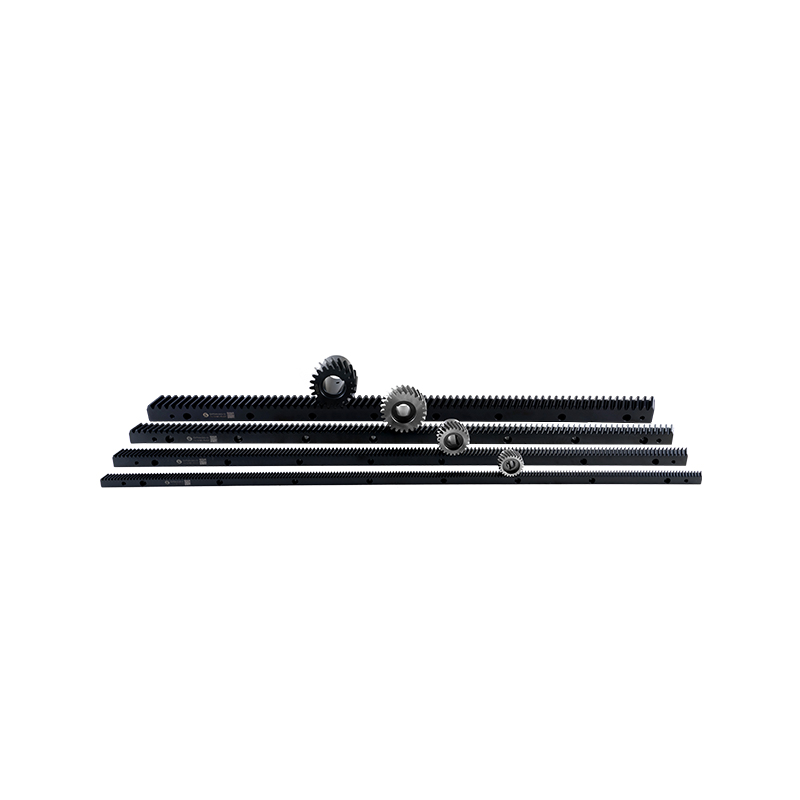
Mechanical systems rarely work in isolation. They repeat movement again and again, sometimes for long periods, and small irregularities start to show up over time.
In practical use, people usually try to avoid:
A helical gear rack and pinion setup is often chosen because the contact does not happen all at once. It spreads out gradually, which changes how the motion feels in real operation.
The system is made from two matching parts that work together in a very direct way. One part turns, the other moves in a straight line.
Inside this setup you usually have:
The key difference is the angle of the teeth. Instead of meeting head-on, they slide into contact step by step.
The motion doesn't jump from one part to another. It develops gradually as more of the tooth surface connects.
What happens during operation:
It feels less like a push and more like a guided transfer of movement.
When this system runs, the movement tends to feel more continuous. It doesn't eliminate all vibration, but it spreads changes in a way that feels less abrupt.
In real situations, users often notice:
It's not about speed or strength, but about how the motion behaves while it is happening.
Sound often comes from how hard parts collide. If contact is sudden, the noise is more noticeable. If contact is gradual, it blends more into the background.
With helical gear rack and pinion systems:
In spaces where machines run repeatedly, this difference becomes easier to notice.
Instead of forcing all pressure into one point, the angled teeth allow contact to move across the surface as the gear rotates.
This leads to:
| Contact Style | What Happens | Movement Feel |
|---|---|---|
| Single-point contact | Sudden engagement | More abrupt motion |
| Spread contact | Gradual engagement | More stable feel |
| Angled contact | Sliding transfer | Smoother motion flow |
The way force spreads is one of the main reasons this structure is used in steady motion setups.
As parts keep moving against each other, surface conditions slowly change. This is normal in any mechanical system where contact is repeated.
Things that usually matter include:
These factors don't change the structure, but they slowly influence how the movement feels over long periods.
This type of system is often used when straight movement needs to stay controlled and repeatable.
It is commonly found in:
The idea stays simple: turn rotation into linear movement without making it feel uneven.
Even a stable system can feel different if parts are not lined up properly. Alignment quietly affects how smooth the motion becomes.
What usually matters:
When alignment is off, movement tends to feel less consistent, even if the structure is unchanged.
Friction is always part of mechanical contact. Over time, it affects how movement feels, so simple care is often used to keep things stable.
Common habits include:
These small actions help keep motion behavior closer to its original feel without changing the system itself.
When mechanical parts keep moving for a long time, vibration becomes something people start to notice, even if it is small. In a helical gear rack and pinion setup, the way contact is spread out helps reduce sudden vibration spikes.
What tends to happen in use:
It doesn't remove vibration completely, but it changes how it is experienced during operation. Instead of sharp pulses, the movement feels more even.
Mechanical systems don't work in isolation. Dust, temperature changes, and general environment conditions slowly influence how parts behave over time.
In everyday use, you may see:
These changes are gradual. They don't stop the system, but they influence how consistent the motion feels.
Every time the gear and rack meet, a small amount of surface change happens. Over time, these tiny changes build a pattern that reflects how the system has been used.
| Usage Stage | Surface Condition | Motion Behavior |
|---|---|---|
| Early use | Slight roughness | Less settled movement |
| Regular use | Smoother contact points | More consistent motion |
| Long use | Stable contact path | Steady movement feel |
This is not sudden change, but something that develops slowly through repeated operation.
Even if the parts are well made, the way they are installed can change how the system feels in operation. Alignment plays a quiet but important role here.
Key points in real setups:
When everything is aligned properly, the system tends to run with fewer interruptions in movement feel.
In actual equipment, helical gear rack and pinion systems are not used for decoration or appearance. They are part of movement control, where repetition and predictability matter more than anything else.
Typical use behavior includes:
The system quietly supports movement without needing attention during normal operation.
Even with different motion technologies available, this setup continues to appear in many mechanical designs. The reason is not complexity, but balance.
It offers a mix of:
It doesn't try to do everything. Instead, it focuses on keeping motion predictable and stable, which is often what mechanical systems need.

© 2025 Zhejiang Yuchen Transmission Technology Co., Ltd.

Transmission Gear And Rack


