

 English
 中文简体
中文简体 русский
 Español

Industry News
Home / News / Industry News / Ground Gear Rack Manufacturer Precision Production and Industrial Solutions
 +86-13306862930 / +86-18668881826
A Ground Gear Rack Manufacturer specializes in producing gear racks with finely finished tooth surfaces achieved through grinding processes. These racks are used in motion systems that require accurate linear movement and consistent engagement with pinion gears. A Ground Gear Rack Manufacturer serves industries such as automation, robotics, CNC machinery, and material handling equipment where precision and stability are essential.
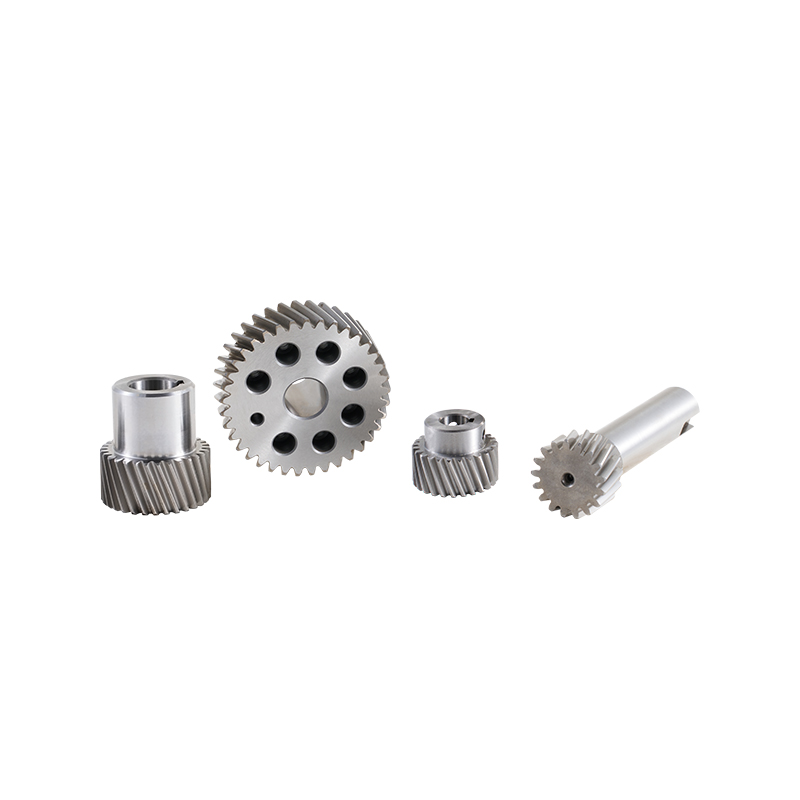
In a Ground Gear Rack Manufacturer, material selection is a critical foundation for product performance. Common materials include alloy steel and carbon steel due to their strength and machinability. Raw materials are inspected for hardness, internal consistency, and surface condition before processing. A Ground Gear Rack Manufacturer ensures that the selected materials can withstand machining, heat treatment, and grinding without deformation.
The design phase in a Ground Gear Rack Manufacturer involves defining tooth pitch, module size, pressure angle, and rack length. Accurate alignment of teeth is essential for proper meshing with pinion gears. A Ground Gear Rack Manufacturer ensures that the linear tooth arrangement maintains consistent spacing and geometry along the entire rack. This supports smooth motion transfer and reduces mechanical deviation during operation.
Before grinding, racks are formed using machining techniques such as milling or shaping. A Ground Gear Rack Manufacturer uses CNC equipment to create the basic tooth profile with controlled dimensions. This pre-machining stage establishes the foundation for later finishing processes. Maintaining uniformity during shaping helps reduce material stress and prepares the rack for precision refinement.
Grinding is a key process in a Ground Gear Rack Manufacturer that enhances surface quality and dimensional accuracy. Specialized grinding machines refine tooth surfaces to achieve consistent profiles and improved contact characteristics. A Ground Gear Rack Manufacturer carefully controls grinding parameters such as wheel selection, feed rate, and alignment to ensure smooth tooth interaction with pinion gears. This process reduces surface irregularities and improves operational consistency.
A Ground Gear Rack Manufacturer applies heat treatment processes such as carburizing, quenching, and tempering to improve mechanical properties. These treatments increase surface hardness while maintaining core toughness. After heat treatment, minor dimensional adjustments may occur, which are corrected during finishing. A Ground Gear Rack Manufacturer manages these processes to balance durability and structural stability.
Products from a Ground Gear Rack Manufacturer are widely used in systems requiring controlled linear motion. Applications include CNC machines, automated production lines, robotics, and positioning equipment. Ground racks provide precise engagement with pinion gears, enabling accurate movement control. A Ground Gear Rack Manufacturer designs components to support consistent performance under repeated load conditions.
Quality control is an important stage in a Ground Gear Rack Manufacturer. Inspection processes include verifying tooth pitch accuracy, straightness, surface roughness, and dimensional tolerances. Advanced measurement tools such as gear inspection instruments and coordinate measuring machines are used. A Ground Gear Rack Manufacturer ensures that each rack meets defined specifications before being approved for distribution.
After production and inspection, a Ground Gear Rack Manufacturer prepares racks for packaging using protective materials to prevent damage and corrosion. Proper wrapping and secure packaging help maintain surface integrity during storage and transportation. A Ground Gear Rack Manufacturer coordinates logistics to ensure products are delivered in suitable condition for installation and use.
For more information on Ground Gear Rack Manufacturer, visit our product page and learn how this innovative technology can support your precision motion control and industrial transmission requirements.

© 2025 Zhejiang Yuchen Transmission Technology Co., Ltd.

Transmission Gear And Rack


