

 English
 中文简体
中文简体 русский
 Español

Industry News
Home / News / Industry News / How a Helical Gear Rack and Pinion Differs From a Spur Rack and Pinion in Operation
 +86-13306862930 / +86-18668881826
Rack and pinion systems are used when rotational movement needs to become linear motion in a controlled way. The basic idea is simple, yet the operating behavior can change quite a lot depending on the tooth shape, the contact style, and the way force moves through the mechanism.
In many machines, the rack and pinion pair carries the job of positioning, shifting, or guiding movement along a straight path. Once the tooth engagement changes, the movement response changes with it. That is why the difference between a helical gear rack and pinion and a spur rack and pinion is not only a matter of shape. It also affects how the system feels in use, how it reacts under load, and how steadily it continues during repeated motion.
In practical settings, the choice is often tied to the kind of motion expected from the equipment. Some layouts need a smoother travel pattern. Others can work with a more direct transfer of force. The tooth style decides much of that behavior before the system even starts running.
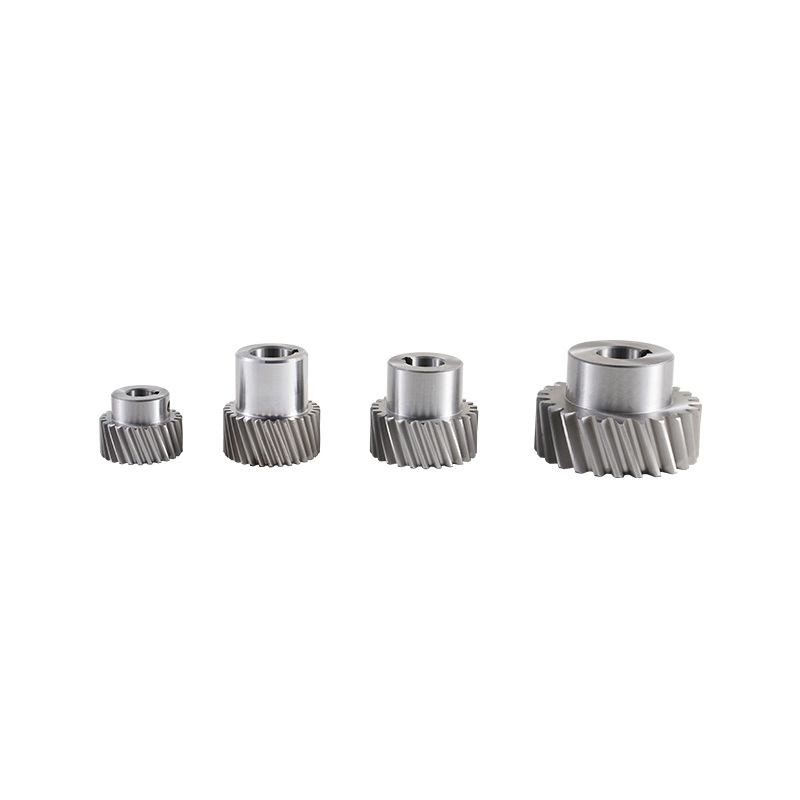
A helical gear rack and pinion uses teeth that are cut at an angle. Because of that angle, contact does not begin all at once across the full face of the tooth. Engagement starts gradually and then spreads along the surface as the parts continue moving. That gradual contact gives the motion a more continuous feel.
A spur rack and pinion works in a different way. Its teeth are straight, so the contact happens in a more direct line. The engagement zone is shorter, and the force transfers with less overlap across the tooth face. The response feels more immediate, and the transition between contact and release is sharper.
That difference is easy to notice in operation. A helical gear rack and pinion tends to move with a softer changeover as teeth meet and separate. A spur rack and pinion gives a more direct motion path, which can suit systems that do not need a gradual engagement pattern.
| System Type | Tooth Style | Contact Behavior | Motion Feel |
|---|---|---|---|
| Helical Gear Rack And Pinion | Angled teeth | Gradual engagement across the tooth face | Smoother and more continuous |
| Spur Rack And Pinion | Straight teeth | Direct engagement along a narrow line | More immediate and direct |
Load distribution is one of the main points that separates the two systems in real use. In a helical gear rack and pinion, the angled tooth form allows contact to spread across a wider area during engagement. That spread helps the force move through the system in a more balanced way.
A spur rack and pinion behaves differently because the contact area is narrower. The force passes through a more focused line of engagement, so the pressure sits more heavily in a limited zone. Under changing load, that difference can affect how stable the motion feels and how the tooth surfaces respond over time.
In practical terms, a helical gear rack and pinion often handles movement in a more distributed way, which can help the load feel less concentrated at a single point. A spur rack and pinion transfers force more directly, which keeps the motion simple and easy to follow, though the load path is less spread out.
Noise and vibration are often tied to the way teeth enter and leave contact. A helical gear rack and pinion usually creates a more gradual change during engagement. Since contact overlaps across the tooth surface, the shift from one tooth to the next is less abrupt. That can make the motion sound and feel calmer during operation.
A spur rack and pinion has a shorter engagement pattern. Teeth meet in a more direct way, so the transition can feel sharper. When the system runs under changing resistance, that direct contact may make vibration easier to notice.
The difference does not mean one system is always better than the other. It means each one behaves in a distinct way. In applications where motion should stay calm and steady, the gradual engagement of a helical gear rack and pinion can be useful. In setups where direct response matters more, a spur rack and pinion may fit the task well.
A helical gear rack and pinion creates a side force because the teeth are angled. As the gears engage, part of the force moves along the axis rather than staying fully in the direction of travel. That side force needs to be considered in the structure around the system.
Support and guidance become more important because the mechanism must hold its position while carrying both motion and lateral pressure. If the supporting parts are not steady enough, alignment can drift slightly during operation.
A spur rack and pinion does not create the same level of axial force because the tooth contact stays straight. Force mainly follows the movement direction, which makes the support requirement different from the helical version.
For many practical users, that becomes a key distinction. A gear rack and pinion can offer smoother motion behavior, yet it asks more from the surrounding support structure. A spur rack and pinion keeps the force path more direct, which simplifies the load direction inside the system.
Motion transfer efficiency depends on how force moves through tooth contact and how much sliding appears during engagement. A gear rack and pinion uses a longer contact path, so the motion changes more gradually. That smoothness can support stable movement, though some sliding along the tooth face is part of the process.
A rack and pinion transfers force in a more direct way. The contact is shorter and more immediate, so the movement follows a cleaner line through the teeth. That gives the system a straightforward operating feel.
In many mechanical layouts, the choice comes down to the kind of motion the system needs. When a smoother transition matters, the helical arrangement can fit well. When a more direct force path is enough, spur contact may be the simpler option.
Wear develops according to how the teeth share contact during operation. The engagement spreads over a broader area, so wear often appears across a wider area of the tooth face. That spreads the contact pressure and changes the surface slowly over time.
Wear usually stays more concentrated. Since contact happens along a narrower line, repeated motion tends to affect the same zones more directly. That creates a more focused wear pattern.
Both systems can work well when matched to the right job. The difference lies in how the tooth surface changes during use and how the machine responds to that change over time.
Installation behavior of rack and pinion systems often depends on how the teeth are shaped and how the contact surface is formed. A ear rack and pinion usually needs more careful alignment during setup because the tooth contact is not purely straight. The angled engagement means the rack and pinion must stay well aligned along both the motion direction and the contact direction.
If alignment shifts slightly, the contact pattern may change across the tooth surface. That can affect how smoothly the motion travels along the rack. For this reason, supporting structure and mounting stability often matter more in helical arrangements.
A rack and pinion has a simpler contact structure. Teeth meet in a straight line, so alignment focuses mainly on the linear direction of movement. Small deviations may still influence performance, though the system is generally less sensitive to multi-directional alignment changes.
In practical use, this difference often shows up during setup and adjustment work. Helical systems tend to require more attention to positioning consistency, while spur systems allow a more direct installation approach.
Real operating environments can change how both systems behave. Continuous movement, varying load, and surface conditions all influence the interaction between teeth.
A gear rack and pinion often shows steadier movement during continuous operation. The gradual engagement helps reduce sudden changes when load varies. That can make motion feel more stable when the system runs for longer periods.
A spur rack and pinion responds more directly to changes in load or direction. When conditions shift, the reaction appears faster, which can be useful in simpler motion paths where direct response is preferred.
Surface condition also plays a role. Lubrication level and contact cleanliness can influence how smoothly teeth move against each other. In helical systems, the longer contact path means surface condition may have a more visible effect on sliding behavior. In spur systems, the shorter contact zone makes the effect more concentrated.
Environmental vibration can also influence both systems. In setups where vibration is present, helical engagement may help reduce the sharpness of movement change, while spur systems may transmit those changes more directly through the structure.
Selection between the two systems is often linked to how the motion is expected to behave rather than one being better in all cases. A helical gear rack and pinion is often associated with smoother movement patterns. The angled tooth engagement supports gradual motion transfer, which can help when consistent travel is needed under changing load.
A spur rack and pinion fits situations where motion needs to be direct and simple. The straight tooth contact allows a clear force path, which keeps the mechanical response easy to predict in straightforward movement systems.
In practical design work, many setups choose based on motion character rather than complexity. When movement needs to stay steady over longer cycles, helical engagement can be suitable. When the system requires direct transfer with minimal contact variation, spur engagement can match the requirement.
Both systems share the same basic function, yet the way they handle force and movement creates different operating behavior. That difference becomes more noticeable when the system runs continuously or under changing working conditions.
Looking at both systems together, the main difference comes from how contact is formed and how force is carried through the teeth. A helical gear rack and pinion spreads engagement across a longer surface, which changes how motion develops and how load is shared. A spur rack and pinion keeps contact more direct, which simplifies the movement path.
In operation, this leads to two different motion characters. One leans toward gradual change, while the other follows a more direct transfer path. Neither approach removes the basic function of converting rotary motion into linear movement, yet each handles the transition in a different way.
| Aspect | Helical Gear Rack And Pinion | Spur Rack And Pinion |
|---|---|---|
| Tooth Contact | Angled and progressive | Straight and direct |
| Motion Character | Gradual transition | Immediate response |
| Load Behavior | Spread across surface | Concentrated line |
| Axial Force | Present due to angle | Minimal influence |
| Motion Feel | Smoother during change | More direct and sharp |
Choosing between helical and spur rack and pinion systems often shapes the surrounding mechanical layout. A gear rack and pinion may require additional support considerations due to side force behavior and longer contact engagement. That can influence how the structure is arranged around the motion path.
A spur rack and pinion allows a more straightforward layout because the force direction stays closer to the movement line. That can simplify design decisions where space or structural complexity needs to remain controlled.
In many engineering situations, the decision is not based on a single factor. Instead, it comes from how motion stability, load behavior, and installation constraints work together. Both systems remain widely used because they serve different motion characteristics rather than competing in the same exact role.

© 2025 Zhejiang Yuchen Transmission Technology Co., Ltd.

Transmission Gear And Rack


