

 English
 中文简体
中文简体 русский
 Español

Industry News
 +86-13306862930 / +86-18668881826
Get a Quote
+86-13306862930 / +86-18668881826
Motion transfer sits as a basic requirement across plenty of industrial machines running today. A cutting machine needs moving its working head along a planned path, while an automated production system might need positioning a platform or shuttling a component between work areas. In these applications, the drive system has to turn rotary movement into controlled linear travel without turning the machine into something awkward operating or maintaining.
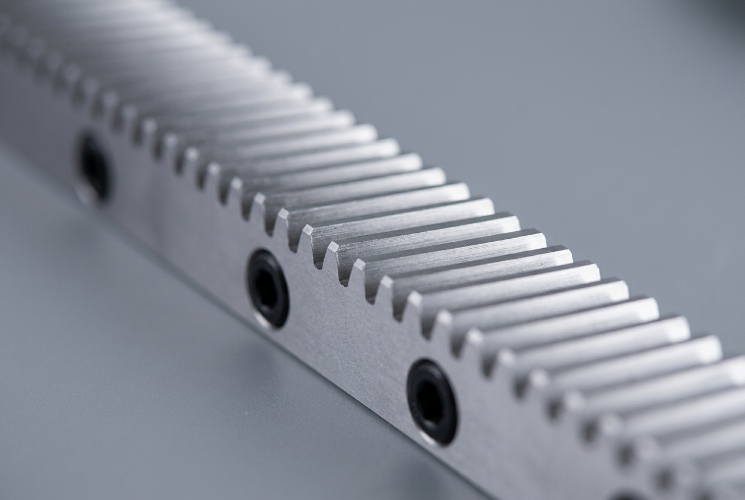
A helical gear rack and pinion system offers a practical route reaching that movement. The pinion rotates and engages with the teeth running along the rack, pushing the rack or the connected machine part along a straight line. The helical tooth arrangement changes how the teeth meet during movement, creating an engagement pattern reading differently from a straight-tooth design.
For equipment manufacturers, the value behind a helical gear system stretches well beyond the movement itself. Tooth engagement, alignment, mounting, lubrication, and component quality all shape how the drive behaves during operation. Getting a handle on these factors helps engineers and buyers settle on a suitable arrangement for whatever workload the machine actually carries.
A helical gear rack and pinion system turns the rotation of a gear into linear movement. The pinion is a circular gear carrying angled teeth, while the rack is a straight component with a matching tooth pattern running its length. As the pinion turns, its teeth engage with the rack and move it along the intended direction.
Unlike a system leaning on a belt or screw, this arrangement transfers movement through direct tooth engagement instead of indirect contact. The rack can mount along a machine bed or guide structure, while the pinion connects to the drive source through a suitable assembly built for that job.
| Component | Main Function | Design Consideration |
|---|---|---|
| Helical pinion | Transfers rotation into linear movement | Tooth form and compatibility |
| Gear rack | Provides the path for linear travel | Length, mounting, and alignment |
| Drive source | Supplies rotational movement | Torque and operating requirements |
| Support structure | Holds the components in position | Rigidity and stability |
| Lubrication arrangement | Helps manage contact between teeth | Suitability for the working environment |
Each component plays into the overall motion transfer process together, none working in isolation. A suitable gear pair can't perform as intended once the rack sits mounted unevenly or the supporting structure allows unwanted movement to creep in.
The motion transfer process kicks off once the drive source turns the pinion. Its angled teeth engage with the matching teeth on the rack, and that rotating movement pushes the rack along a straight path. If the rack sits fixed to the machine structure, the pinion assembly can travel instead, depending entirely on how the machine's laid out.
The helical tooth arrangement shapes how contact develops between the two components over time. Rather than having the entire tooth width engage in one instant, contact progresses along the angled tooth surface gradually. This supports smoother engagement once the rack and pinion are correctly designed and installed from the outset.
Smooth motion still doesn't come down to tooth shape alone, though. Mounting accuracy, gear quality, support rigidity, lubrication, and operating conditions all shape the movement the machine actually experiences day to day.
The angled teeth used in a helical gear system create a gradual engagement pattern as things turn. As the pinion rotates, contact develops progressively instead of happening across the tooth width all at once. This cuts down abrupt changes in tooth engagement during continuous movement.
Tooth engagement also shapes how load passes between the pinion and rack during each cycle. Depending on the design, more than one pair of teeth can share the load during part of the engagement cycle. This helps distribute contact force, though the result still comes down to gear geometry, alignment, and applied load working together.
| Helical Gear Feature | Potential Effect on Motion Transfer |
|---|---|
| Angled tooth arrangement | Creates progressive tooth engagement |
| Matching rack and pinion teeth | Supports consistent mechanical contact |
| Suitable mounting alignment | Helps maintain the intended engagement |
| Appropriate lubrication | Reduces friction and contact wear |
| Stable support structure | Limits unwanted movement during operation |
These features work as a group rather than standing independently. If the rack goes in mounted at an incorrect angle or the pinion doesn't match the rack properly, the intended engagement pattern won't hold together as planned.
During operation, the rack and pinion need transmitting the force required moving the connected machine part along its route. The load shifts as the machine accelerates, slows down, carries different materials, or runs into resistance along its travel path. In a helical arrangement, the angled contact creates forces running in more than one direction at once, so the supporting structure and bearings need suiting the axial force tied specifically to that tooth arrangement.
Load transfer also depends on the contact surfaces staying in suitable condition as the machine ages. Wear, contamination, incorrect lubrication, or poor alignment can all change how teeth engage and distribute force between them. Regular inspection helps catch these conditions before they balloon into larger operating problems.
A precision helical rack suits applications where the rack's tooth form, dimensional consistency, and mounting arrangement need supporting controlled movement throughout its range. A positioning machine, for instance, might need its working head moving along a repeatable path cycle after cycle. If the rack carries noticeable variation along its length, the relationship between pinion rotation and linear movement can turn less consistent as travel accumulates.
A precision rack doesn't automatically guarantee precision in the finished machine, either, no matter how carefully it was ground. Backlash, mounting errors, structural movement, control settings, and wear can still shape positioning regardless of rack quality. The rack and pinion should get evaluated as part of the full motion arrangement rather than treated as isolated components.
Alignment ranks as a major factor in how a rack and pinion system transfers movement across its travel. If either component goes in mounted incorrectly, the contact pattern can turn uneven in short order, increasing friction and placing additional stress onto the tooth surfaces as the machine runs. It can also create noise, vibration, uneven wear, or shifts in motion as the pinion travels along the rack's length.
A practical installation process covers checking the supporting surface, rack position, pinion mounting, and engagement across the intended travel distance. The rack also needs staying securely fixed once operation begins, since loosened mounting points or a shifting support structure can change the engagement even when the original alignment checked out fine.
Backlash refers to the small amount of movement that can occur between gear teeth once the direction of force changes. In a machine traveling repeatedly along the same path, backlash can grow noticeable once the drive reverses direction, creating a delay between drive input and the rack's actual response.
A helical gear system still needs appropriate control over backlash regardless of its tooth angle. Backlash deserves evaluating alongside the machine's other sources of motion variation too, since guide movement, mounting flexibility, and structural changes can also shape the final position reached.
Automated equipment often needs moving tools, platforms, workpieces, or handling units between defined positions throughout a shift. Helical racks can get incorporated into linear drive arrangements where the rack and pinion suit the required travel and load, supporting layouts needing a straight movement path while the drive source stays connected to a rotating pinion.
| Application | Motion Requirement | Design Consideration |
|---|---|---|
| Cutting equipment | Movement along a working path | Positioning consistency, rigidity |
| Packaging machinery | Movement between operating stages | Engagement stability, access |
| Material handling | Movement of loads along a route | Load capacity, mounting strength |
| Assembly equipment | Repeatable positioning | Backlash and motion response |
The rack and pinion also need working alongside the machine's control system in tandem, since sensors and drive controls shape how accurately that movement gets commanded and held in place.
Straight teeth meet across the tooth width more directly, while helical teeth create progressive engagement along an angled surface. A helical design suits situations where gradual engagement proves useful, but its angled teeth also create axial forces needing handling through the supporting arrangement. A straight-tooth system can turn out simpler installing in some applications, depending on layout and performance needs.
| Consideration | Helical | Straight-Tooth |
|---|---|---|
| Tooth engagement | Progressive, angled | More direct across width |
| Force direction | Includes axial force | No matching axial force |
| Selection factors | Motion quality, load, layout | Simplicity, load, layout |
The teeth of a rack and pinion stay in contact during movement, so friction and wear need managing throughout the machine's working life. The lubricant needs suiting the gear materials, operating conditions, and surrounding environment, since dust, moisture, or temperature swings can change what works. Surface condition matters just as much, since dirt, metal particles, or corrosion can affect contact between the two parts.
Choosing a helical rack gear calls for understanding the machine's intended movement before anything else, including what needs moving, how the load gets supported, and what level of motion consistency the application requires. The gear pair deserves considering alongside the drive source, support structure, bearings, and linear guidance all at once, since a rack fitting the available space can still prove unsuitable if its load capacity or mounting requirements miss the mark.
Manufacturing quality shapes how consistently the rack and pinion engage during operation day after day. Production control can cover checks of the rack's dimensions, tooth form, and visible condition, while the pinion gets inspected for compatibility since the two components operate as a matched pair rather than standalone parts.
The installation process decides how the rack and pinion actually interact once inside the finished machine. The engagement deserves checking along the entire rack's length, since a setup looking correct at one point can behave differently farther along the travel path. Once the system's assembled, operational checks help identify uneven movement or signs of incorrect engagement before trouble spreads, with any detected issue addressed before normal production use begins.

© 2025 Zhejiang Yuchen Transmission Technology Co., Ltd.

Transmission Gear And Rack


