

 English
 中文简体
中文简体 русский
 Español

Industry News
 +86-13306862930 / +86-18668881826
Get a Quote
+86-13306862930 / +86-18668881826
Linear movement looks genuinely simple when viewed from outside a machine housing. A rotating gear turns, a rack moves, and the connected equipment travels along a straight path without much drama visible from the outside. Inside the transmission system, however, the way the rack and pinion meet can have a genuinely noticeable effect on movement quality throughout a working cycle.
A Helical Gear Rack and Pinion system uses angled teeth, rather than the straight tooth arrangement found on a conventional rack. This changes how the two parts come into contact as the pinion rotates through its path. Instead of engagement occurring across the tooth in a direct manner, contact develops progressively along the angled tooth surface as the parts pass each other.
That difference matters for equipment where movement needs to feel controlled and consistent throughout a shift. Automated machinery, positioning equipment, machine tools, gantry systems, and other linear-motion applications may all have genuinely different requirements, but they share an interest in how smoothly rotary movement becomes linear travel.
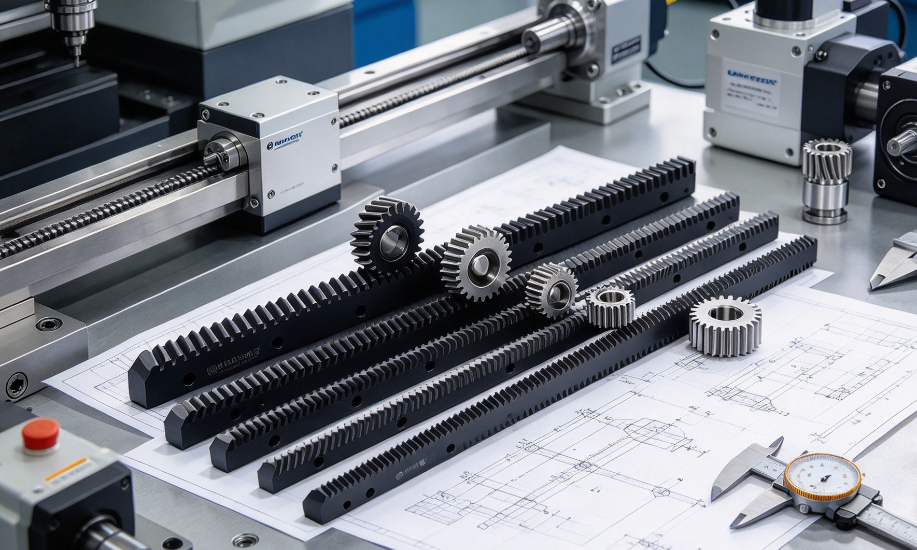
The main distinction comes from the direction of the teeth themselves. A traditional spur rack uses straight teeth, and its matching pinion engages with the rack in a direct pattern as it turns. A helical arrangement uses angled teeth instead, creating a genuinely different contact relationship between the two components.
The angled arrangement allows engagement to develop progressively as the pinion moves along the rack. This can change the way force transfers through the tooth surfaces and can create a more continuous movement experience for the connected equipment.
| Rack System | Tooth Arrangement | Movement Characteristic |
|---|---|---|
| Spur rack | Straight teeth | Direct engagement |
| Helical rack | Angled teeth | Progressive engagement |
| Round rack | Teeth arranged around a round body | Depends on the equipment structure |
The choice between these arrangements depends on the machine and its intended movement pattern. A helical design isn't simply a different visual version of a spur rack sitting on the shelf. The tooth direction changes how the complete transmission behaves under load.
Tooth angle forms a genuinely important part of a helical rack's working behavior. When the teeth sit angled, contact doesn't develop in exactly the same way it does with straight teeth passing through. The pinion begins engaging with part of the tooth surface, while other parts continue entering the working area moments later.
This creates a genuinely more gradual transfer of movement through the mechanism. For machinery that performs repeated linear travel throughout the day, this gradual engagement can make the motion feel more controlled to an operator standing nearby. It can also help reduce the sudden changes in contact that may occur when straight teeth enter and leave engagement abruptly.
The actual result still depends on the complete system surrounding the rack. Tooth shape, manufacturing quality, installation, lubrication, and the supporting structure all influence how the rack ultimately operates.
Meshing describes the way the rack and pinion teeth meet during operation, moment by moment. If contact changes abruptly, the movement can feel genuinely less consistent to anyone watching the equipment run. When engagement develops progressively instead, the transmission can provide a more continuous transfer of rotary motion into linear movement.
This is one reason helical racks get considered for equipment where movement quality matters to the process. The rack doesn't work independently, though. The pinion must have a compatible tooth arrangement so the two parts can engage as intended, cycle after cycle.
| Meshing Consideration | Effect on the System |
|---|---|
| Tooth contact | Influences movement transfer |
| Contact continuity | Affects movement consistency |
| Tooth alignment | Supports proper engagement |
| Pinion matching | Maintains compatibility |
| Surface condition | Influences contact behavior |
The objective isn't creating unnecessary complexity for its own sake. It's establishing a transmission relationship that fits the machine's operating needs on the floor.
Noise can become genuinely noticeable when a rack system operates repeatedly through a shift. Every time the pinion rotates, its teeth meet and leave the rack in sequence. The way this contact occurs influences the sound produced by the transmission as it works.
A helical arrangement provides progressive tooth engagement, which can contribute to a softer operating sound compared with a direct straight-tooth arrangement, assuming the other system conditions stay similar. However, noise doesn't depend on tooth direction alone.
Installation quality, lubrication, component condition, supporting structures, and the overall machine design can also affect the sound produced. For procurement teams, it proves useful treating noise as one part of transmission selection, rather than as an isolated product feature checked in isolation.
Many automated machines need a rotary motor to create controlled movement along a straight path across a work area. The rack and pinion provide the mechanical connection between these two forms of movement, translating one into the other.
As the pinion turns, its teeth push against the rack and cause the rack to travel forward. The angled teeth in a helical system influence how that interaction develops moment by moment. This can prove useful when the machine needs movement that feels genuinely less abrupt to the surrounding process.
Applications may include automated positioning equipment and gantry systems working across a factory bay. Machine tools fit here too, along with material handling equipment, automated gates, and linear production equipment moving parts down a line.
Each application has its own structural requirements worth respecting. The rack needs to work with the motor, pinion, guides, mounting structure, and control system, rather than getting evaluated alone on a spec sheet.
A rack system has to transfer movement while handling the forces created during operation, cycle after cycle. The tooth surfaces share the contact between the rack and pinion as they interact. A helical arrangement changes how that contact develops and can distribute the interaction along the tooth surface more evenly.
This can influence the way the transmission responds when the machine accelerates, moves steadily, or changes direction mid-cycle. Load behavior becomes especially relevant in equipment that carries moving structures around a facility.
A gantry system, for example, may use the rack to move a large assembly along a guided path stretching the length of a bay. The rack and pinion need to work together with the supporting structure so movement remains controlled throughout. The appropriate design depends on the complete application, rather than on rack shape alone.
A helical rack may have a genuinely carefully designed tooth arrangement, but the actual surface condition still matters considerably once it's installed. The rack and pinion need to meet consistently through every cycle. Uneven surfaces, damage, contamination, or poor manufacturing control can affect the way the components engage together.
This is why buyers often need looking beyond the basic product name printed on a datasheet. A helical gear rack and pinion should get considered as a matched transmission system. The rack, pinion, mounting method, and surrounding components all contribute to the final operating behavior on the floor.
Manufacturers can also inspect tooth surfaces during production to identify visible inconsistencies before the rack reaches the customer's dock. For industrial procurement, clear product information can make it genuinely easier to compare different rack systems according to the actual machine application at hand.
A suitable rack can still produce genuinely uneven movement if it isn't installed properly on the mounting surface. The rack needs to remain correctly positioned in relation to the pinion throughout its travel. The supporting surface should also provide stable mounting, so the rack doesn't shift unnecessarily during operation.
Installation becomes particularly important for helical systems because the teeth sit angled, not straight. The matching pinion needs to engage with the rack in the intended direction consistently. If the components aren't positioned correctly, the expected contact pattern may never fully develop.
A practical installation process can check the mounting surface first, then position the rack according to the equipment design already laid out. Matching the rack with the correct pinion comes next, followed by checking tooth engagement directly and confirming smooth movement before regular operation begins.
Alignment determines how the rack and pinion meet throughout the travel path. If the rack isn't positioned consistently along the movement path, the pinion may experience genuinely changing contact as it travels from one end to the other.
That can influence movement, sound, and component wear over time. The same principle applies to other rack systems on the floor. A spur gear rack and pinion also needs suitable alignment, even though its teeth are arranged differently from a helical one.
Helical systems simply introduce another layer of consideration because tooth direction affects the contact relationship directly. For long equipment structures, alignment can also involve several rack sections joined together. The connection between adjacent sections needs maintaining a suitable transition, so the pinion can move across the entire working path without unnecessary interruption.
Lubrication helps manage contact between moving surfaces engaging repeatedly. A rack and pinion interact over and over as the machine operates through its shift. Suitable lubrication can help reduce friction and support genuinely smoother movement throughout.
The type and method of lubrication should match the product and operating environment surrounding it. Too little attention can allow contamination or surface wear to affect the contact area over time. Excessive or unsuitable lubrication can also create maintenance problems of its own.
| Maintenance Area | Practical Consideration |
|---|---|
| Lubrication | Follow the product's intended care method |
| Tooth surface | Keep contact areas in suitable condition |
| Rack mounting | Check for unwanted movement |
| Pinion | Inspect matching teeth |
| Surrounding area | Reduce contamination where practical |
Regular inspection can help identify changes before they become genuinely larger operating problems down the line.
Industrial environments can contain dust, chips, moisture, and other materials that may reach moving components without much warning. When unwanted material enters the tooth contact area, it can affect how smoothly the rack and pinion interact with each other.
The problem isn't limited to helical racks alone. Any exposed rack system can be affected by its surroundings over time. However, equipment that depends on consistent movement may make changes in transmission behavior more genuinely noticeable to an operator.
Keeping the rack area reasonably clean and following the manufacturer's maintenance instructions can help protect the working surfaces underneath. The surrounding machine structure should also get considered here. Guards, covers, or suitable equipment placement may reduce unnecessary exposure where the application allows it.
The comparison between these two systems is mainly about how their teeth engage during a cycle. A spur gear rack and pinion uses straight teeth and a direct contact pattern, which can suit machinery where simple linear transmission meets the application requirements adequately.
A helical system uses angled teeth and progressive engagement instead. It can get considered when movement smoothness, operating sound, and continuous tooth contact receive genuinely more attention from the design team.
| Consideration | Spur Rack | Helical Rack |
|---|---|---|
| Tooth direction | Straight | Angled |
| Engagement | Direct | Progressive |
| Movement feel | Straightforward | More gradual |
| Noise consideration | Depends on system design | Progressive engagement may influence sound |
| Matching pinion | Spur pinion | Helical pinion |
| Selection focus | Simple linear transmission | Controlled transmission behavior |
Neither type automatically suits every machine on the floor. The surrounding structure and actual movement requirements should guide the decision made.
Helical rack systems can get considered for machinery that converts rotary motion into repeated linear travel across a work area. Automated equipment is one example worth mentioning. A motor can rotate the pinion while the rack moves a machine assembly along a guided path stretching across a bay.
CNC machine tools may also use rack systems where controlled movement is needed across a working surface. Gantry equipment presents another application worth noting. The rack can form part of the drive arrangement that moves a large structure along its guide system throughout production.
The same basic principle can adapt to other machinery types as well. The important point is that the rack needs matching the equipment's movement, load behavior, mounting structure, and operating environment together as one set.
A Round Gear Rack provides another structural option worth understanding. Instead of using a flat rack body, the rack gets built around a round form instead. This can make it suitable for equipment where the available structure or movement arrangement calls for a genuinely different profile than a flat one.
The choice between round, spur, and helical systems depends on the physical layout of the machine in question.
| Rack Form | Structural Characteristic | Possible Selection Focus |
|---|---|---|
| Spur rack | Flat body with straight teeth | Direct transmission |
| Helical rack | Flat body with angled teeth | Progressive engagement |
| Round rack | Circular body | Space and equipment structure |
This comparison shows why rack selection should begin with the machine itself, rather than the product label alone. A system that works well in one structure may not fit another application without changes to the surrounding equipment.
Industrial buyers often need considering genuinely more than the rack itself sitting on a spec sheet. The matching pinion, mounting arrangement, operating environment, maintenance method, and expected movement all influence the purchasing decision together.
Useful questions include what type of machine will use the rack, and how the rack will get mounted once it arrives. What type of pinion is already in use matters too, along with whether the machine requires gradual tooth engagement for its process. Whether operating noise is a genuine consideration deserves asking, along with how the rack will get lubricated and whether the working area faces exposure to contamination. Whether the rack will need replacement or extension later rounds out the checklist worth working through.
These questions can make supplier communication genuinely more practical for both sides. They also help prevent a common purchasing issue: selecting a rack because its dimensions or appearance seem suitable, without checking whether its tooth arrangement matches the existing transmission already installed.
For manufacturers, transmission quality begins genuinely during rack production itself, not afterward. Tooth formation, surface finishing, rack straightness, and matching with the pinion all contribute to how the finished system behaves once installed.
Production inspection can focus on the consistency of the tooth structure and the condition of the working surface throughout a batch. Packaging also matters during storage and transportation. A rack can get manufactured correctly but still require protection from impact, contamination, and unsuitable handling before installation on site.
For B2B buyers, consistent product information proves useful as well. Clear identification of rack type, matching components, intended applications, and care requirements makes procurement genuinely easier and reduces the risk of selecting incompatible parts.
A rack system experiences repeated contact throughout its working life on the floor. The condition of the tooth surfaces can gradually change through use, especially when lubrication, alignment, cleanliness, or installation conditions aren't properly managed over time.
Regular observation can help identify changes in movement or sound before they escalate. If the equipment begins moving differently than usual, inspection of the rack and pinion can help determine whether the change relates to the transmission or another part of the machine entirely.
This approach proves useful because rack performance connects to the complete drive system surrounding it. A helical rack and pinion doesn't operate in isolation. Its movement depends on the relationship between the rack, pinion, motor, guides, mounting structure, lubrication, and operating conditions all working together.
Engineers need considering the rack as part of the machine's movement system as a whole. The available installation space, required travel path, pinion position, supporting structure, and maintenance access can all influence the design decisions made.
The tooth arrangement should match the intended movement characteristics for the application. If smooth transmission matters to the process, the designer may consider how progressive engagement, rack alignment, tooth condition, lubrication, and supporting components will work together as a set.
The design process can also consider future service needs down the line. A rack that's easy to inspect, clean, adjust, and replace can prove genuinely more practical for equipment that operates regularly through long production runs.
This makes transmission design a genuinely broader task than simply choosing a rack profile off a catalog page. It involves creating a workable relationship between the rack and every component that interacts with it throughout the machine's working life.

© 2025 Zhejiang Yuchen Transmission Technology Co., Ltd.

Transmission Gear And Rack


