

 English
 中文简体
中文简体 русский
 Español

Industry News
 +86-13306862930 / +86-18668881826
Get a Quote
+86-13306862930 / +86-18668881826
In many motion systems used for positioning, lifting, cutting, or guiding movement, mechanical transmission parts run quietly in the background while carrying continuous load. A helical gear rack and pinion system often appears in these setups because motion feels smoother compared with straight tooth engagement, especially during repeated start-stop cycles.
Over time, even well-installed systems begin to show subtle changes in movement behavior. Slight resistance, small vibration, or uneven sliding feel usually point toward gradual surface changes inside the gear engagement area. Maintenance becomes less about fixing failure and more about keeping motion predictable during daily use.
A helical gear rack and pinion converts rotation into linear motion through angled tooth contact. In practical equipment, this structure is often found in sliding platforms, positioning rails, and mechanical arms where movement needs to stay controlled rather than abrupt.
Compared with straight engagement systems, contact does not happen at one instant. Tooth surfaces meet gradually, which spreads force over a longer engagement path. During operation, this reduces sudden impact and creates a more continuous motion feel.
In real working machines, a few behavior patterns are often noticed:
| Motion Condition | Real-World Behavior |
|---|---|
| light load movement | very smooth sliding feel |
| medium load operation | stable engagement across teeth |
| frequent direction change | gradual force transfer |
| long continuous run | heat and wear slowly accumulate |
| uneven load distribution | slight motion resistance variation |
In daily industrial environments, this system often works continuously across long cycles, which makes small changes in condition gradually visible.
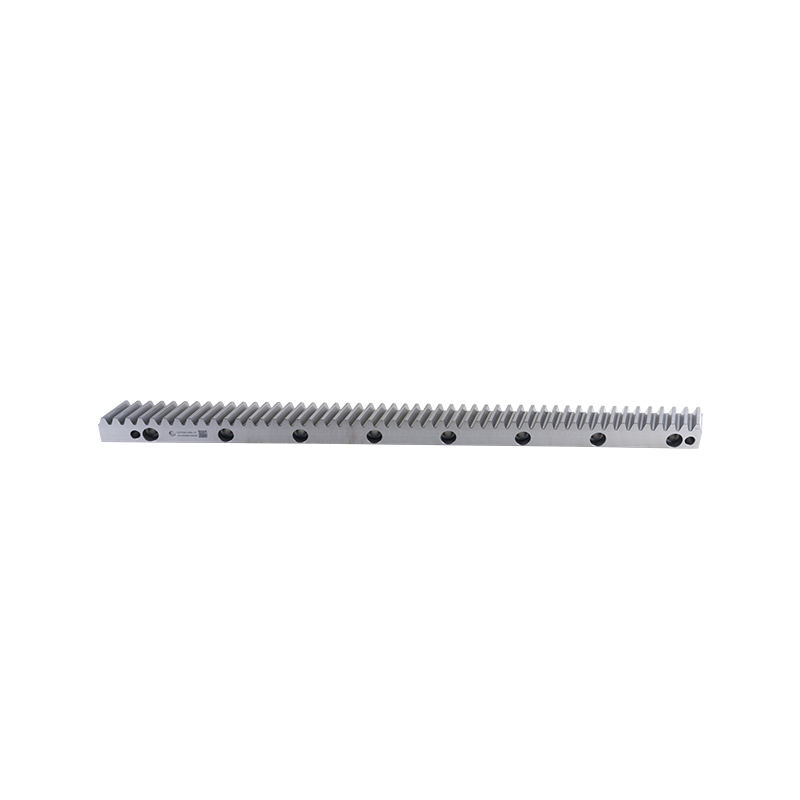
Inside a working helical gear rack and pinion system, contact surfaces never stop interacting. Each movement cycle transfers force across tooth faces. Even when load seems stable from outside, microscopic wear continues during every engagement.
In real equipment environments, maintenance is needed not only after visible issues appear. Small changes often begin as changes in movement feel. A slight difference in sliding resistance or minor vibration during travel usually signals internal surface change.
Common real-world reasons maintenance becomes necessary:
Over time, these conditions influence how evenly force travels across engagement surfaces.
Lubrication inside a helical gear rack and pinion system acts like a thin separation layer between metal surfaces. During early operation, distribution is usually stable, and movement feels consistent. As working time increases, lubrication begins to shift due to temperature rise, motion frequency, and external contamination.
In practical environments such as automated machinery or positioning systems, lubrication is not static. It moves, thins out in high-pressure zones, and sometimes collects in lower stress areas.
Typical lubrication behavior observed in real systems:
In real usage, lubrication condition often decides how long smooth motion can continue before noticeable resistance appears.
| Lubrication State | Movement Effect |
|---|---|
| fresh and evenly distributed | smooth continuous travel |
| partially depleted zones | slight resistance increase |
| contaminated layer | irregular sliding feel |
| overheated condition | reduced smoothness in motion |
| uneven spread | variation in engagement noise |
Even when installation is done carefully, a helical gear rack and pinion system can slowly shift alignment during long-term use. Machine vibration, structural load changes, and repeated directional movement all contribute to small positional changes over time.
In practical machinery, alignment issues rarely appear suddenly. Instead, motion becomes slightly uneven or feels less stable during certain travel sections.
Common field observations include:
Alignment behavior is closely connected to how the rack is fixed, how the pinion is supported, and how rigid the surrounding structure remains during operation.
Wear inside a helical gear rack and pinion system develops quietly during operation. Each engagement cycle transfers force across angled tooth surfaces. Over long use periods, certain areas experience higher contact frequency than others.
In field applications, wear is usually not visible at early stages. Instead, it is felt through changes in motion behavior.
Typical early signs include:
Wear patterns are influenced by load distribution, lubrication condition, alignment stability, and operating environment.
| Real Condition | Effect on Gear Engagement |
|---|---|
| stable load, clean lubrication | smooth long-term motion |
| dusty environment | increased surface friction |
| misaligned installation | uneven tooth wear |
| long continuous operation | gradual heat and wear buildup |
| frequent direction change | faster surface contact variation |
In real workshop conditions, a helical gear rack and pinion rarely works in a perfectly clean space. Even when equipment is covered or partially enclosed, fine dust still enters through movement gaps and air circulation. Over time, these small particles settle along tooth surfaces and gradually change how smooth the motion feels.
At the beginning, the change is not obvious. Movement still runs, only a slight increase in resistance may appear during slow travel. As dust mixes with lubrication, the surface layer becomes less uniform, and engagement between teeth starts to feel less consistent, especially when the direction of movement changes frequently.
Cleaning in practical use is often simple, not complicated. Wiping along the rack, clearing visible debris from tooth gaps, and removing accumulated residue around mounting areas are usually enough to restore more stable contact. The key point is not heavy cleaning, but regular removal of what builds up during operation.
In environments such as woodworking machines, packaging systems, or automated sliding platforms, dust behaves differently. Fine particles tend to stick more easily when temperature rises during long operation. Once mixed with oil or grease, the layer becomes thicker and starts to affect smooth sliding.
A helical gear rack and pinion does not age in a uniform way. The working environment changes how fast internal surfaces wear and how quickly lubrication behaves differently over time.
Continuous operation creates heat along the contact line between gear and rack. That heat slowly changes lubrication thickness and spreads it unevenly. In long cycles, motion may still feel stable, yet small variations begin to appear when load changes suddenly.
In intermittent operation, the system cools down between cycles. That cooling helps reduce heat stress, yet dust and moisture may settle more easily during idle periods. When movement restarts, the first few cycles often feel slightly different compared with steady running.
Outdoor equipment adds another layer. Temperature changes between day and night affect metal expansion, and small shifts in alignment can appear after repeated cycles. In such conditions, maintenance becomes more about observation than scheduled action.
Before a helical gear rack and pinion even starts running, installation quality already shapes how it will behave months later. A small deviation during mounting can slowly turn into uneven wear patterns that are difficult to notice in early stages.
If the rack is not fully aligned with the movement direction, the pinion may contact one side more than the other. At first, motion still works normally, but load distribution becomes uneven. Over time, one side of the tooth surface begins to show more wear, while the opposite side remains relatively unchanged.
Mounting surface rigidity also plays a role. A weak base allows slight vibration during movement. That vibration does not stop operation, yet it slowly changes how contact happens between teeth. Instead of smooth engagement, micro-impact points begin to appear.
Even tightening sequence during installation can influence final behavior. Uneven force across mounting points may cause slight distortion along the rack line, which later affects motion consistency.
Inspection of a helical gear rack and pinion in field conditions is often based on simple sensory feedback rather than measurement tools. Experienced operators usually rely on sound, touch, and motion feel.
A change in sound during movement often appears before visible wear. A slightly rough tone during direction change can indicate uneven contact or lubrication variation. In some cases, vibration increases slightly during loaded movement, even though unloaded travel still feels normal.
Another common sign is variation in resistance along different travel positions. Certain sections may feel smoother, while others feel slightly tighter. This usually indicates localized wear or alignment shift rather than system-wide failure.
Visual inspection may also show early marks on tooth surfaces. These marks are not deep damage, but small changes in surface texture caused by repeated contact under load.
In practical industrial environments, a helical gear rack and pinion is often used in systems that require controlled linear movement rather than sudden motion. Sliding platforms, positioning stages, transfer arms, and adjustable frames all rely on stable engagement between rack and gear.
In many of these systems, motion is not continuous in a single direction. Movement often starts, stops, and reverses many times during a single operation cycle. Each change in direction places a different type of load on tooth surfaces, which slowly shapes wear patterns over time.
In automated systems, repeatability matters more than single motion speed. Even small irregularities in engagement can influence final positioning accuracy. That is why maintenance is not only about keeping parts running, but about keeping motion predictable across repeated cycles.
Over long use periods, systems that receive consistent cleaning, lubrication, and alignment checks tend to maintain smoother movement. Systems without regular attention may still operate, yet motion feel gradually becomes less uniform.
Over time, a helical gear rack and pinion system develops its own motion character based on how it is used. Some systems stay smooth across long cycles, while others slowly develop resistance variation depending on load and environment.
In stable conditions with proper alignment and lubrication, motion tends to remain consistent for a longer period. In dusty, high-load, or vibration-heavy environments, changes appear earlier and become more noticeable during slow movement or direction switching.
Maintenance in real use is less about restoring a perfect condition and more about keeping motion within a stable and predictable range. Small adjustments over time often matter more than large repairs after long neglect.

© 2025 Zhejiang Yuchen Transmission Technology Co., Ltd.

Transmission Gear And Rack


