

 English
 中文简体
中文简体 русский
 Español

Industry News
 +86-13306862930 / +86-18668881826
Get a Quote
+86-13306862930 / +86-18668881826
Mechanical systems that use rack and pinion movement usually generate sound during operation, and that sound is not tied to a single reason, since it grows from contact behavior, load transfer pattern, and how vibration travels through connected parts once motion begins. In many conventional layouts, engagement between teeth happens in a very short moment, where force jumps from no contact to full contact almost instantly, and that sudden change becomes a starting point for vibration that spreads outward through the structure.
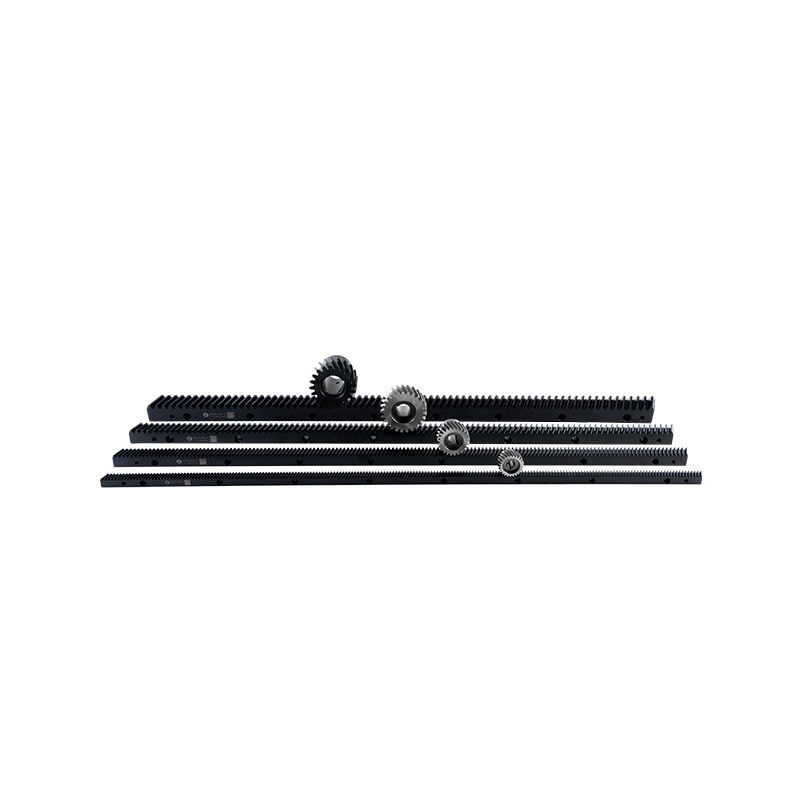
A helical gear rack and pinion follows a different contact path, where tooth surfaces meet at an angle rather than head-on, so engagement does not appear all at once across the full face, instead it develops gradually along a slanted line, and that slow progression changes how mechanical energy enters the system.
Noise in rack and pinion motion is often linked to how force is transferred at the instant two tooth surfaces meet, especially when that meeting happens with uneven timing or concentrated impact. Even when parts are well aligned, small irregularities in contact still exist, and those small events repeat continuously during operation.
Typical sources of sound include:
When engagement is sharp, energy does not have time to spread across the surface, so it turns into vibration almost immediately, and that vibration becomes audible once it travels through the surrounding structure.
Helical tooth structure introduces an angled contact line, so instead of a full tooth face meeting another surface at once, contact begins at one edge and slowly moves across the tooth width. That movement creates a rolling-like transition rather than a sudden strike.
During operation, several changes happen at the same time:
Because contact never begins or ends all at once, mechanical energy enters and leaves the system in a more controlled way, and that reduces the sharpness of force peaks that normally trigger vibration.
When two rigid surfaces meet suddenly, energy has very little space to spread, so it turns into a short impulse, and that impulse becomes vibration. In a helical arrangement, contact begins softly at one end and extends gradually, so energy transfer is stretched across time and surface area.
Several effects naturally appear:
Instead of a single strong contact event, engagement behaves more like a continuous sliding exchange, and that difference plays a large role in reducing noise.
One important characteristic of helical gear rack and pinion systems is that more than one tooth tends to share load at the same time. Because the contact line is angled, engagement overlaps across adjacent tooth regions, so load does not rely on a single point of contact.
That overlapping structure leads to more balanced force behavior:
| Contact Behavior | Straight Tooth System | Helical Tooth System |
|---|---|---|
| Contact timing | sudden engagement | gradual engagement |
| Load sharing | limited overlap | multiple contact zones |
| Force change | sharp variation | smoother transition |
| Vibration tendency | higher spikes | reduced peaks |
Because load is never concentrated in a single instant, mechanical response becomes steadier, and that steadiness is closely linked to lower noise output.
Vibration in mechanical motion usually follows the pattern of force fluctuation, so when force changes quickly, vibration becomes stronger. In helical geometry, force changes are spread across a longer contact path, which naturally lowers the intensity of vibration peaks.
Behavior during operation often appears as:
Instead of repeated sharp pulses, motion becomes more continuous, and that continuity reduces the mechanical “harshness” that often contributes to sound generation.
Even well-machined gear systems contain small deviations in surface alignment or contact timing, and those small differences normally appear as micro-impacts during meshing. In straight-cut systems, those impacts happen in a very direct way, which makes them more noticeable.
Helical geometry changes how those small variations behave:
Instead of a single point reacting to an imperfection, multiple contact zones share the response, and that reduces sudden acoustic spikes.
Angled tooth geometry introduces a side force along the shaft direction during engagement, known as axial thrust. This force does not directly increase noise, but it influences how the system must be supported mechanically.
Key behavior points include:
When mechanical support is properly designed, axial thrust remains controlled, allowing the smoother engagement behavior of helical contact to dominate the overall operation.
Noise behavior in a helical gear rack and pinion system does not come from geometry alone. Even when tooth shape already softens contact, the final sound still depends on lubrication, installation condition, working load, and how stable the structure holds the moving parts during continuous motion. Each factor changes how vibration appears, even when the meshing pattern stays the same.
Contact between helical teeth is never purely static. A sliding motion exists along the angled face, and that sliding behavior creates a natural need for a thin lubricating layer between surfaces. Without it, friction noise becomes more noticeable, especially during continuous engagement.
When lubrication is present in a stable condition, several changes appear:
Instead of metal surfaces touching directly, a thin film separates them, and that film behaves like a buffer during motion. Even slight variation in lubricant distribution can shift sound character, although the overall trend remains smoother compared to dry contact.
Helical gear rack and pinion systems respond to changes in speed and load in a more continuous way, since engagement does not start and stop suddenly. Motion stays connected across the entire cycle, so changes in operating conditions appear more as gradual shifts rather than sharp transitions.
Under different conditions, several patterns can be observed:
Even when load increases, overlapping tooth contact helps distribute force instead of concentrating it in one point, which reduces the chance of sudden vibration spikes.
In many mechanical layouts where movement happens near people or sensitive components, sound control becomes part of the design expectation rather than a secondary effect. Helical gear rack and pinion systems often appear in such environments because motion stays more continuous and less abrupt.
Typical usage environments include:
In these applications, the goal is not silence, but reduction of sudden mechanical noise peaks that may affect surrounding operation or perception of smoothness.
Even with smoother tooth engagement, system structure still shapes how sound travels. A stable design helps maintain alignment, and alignment stability directly influences how evenly teeth share load during motion.
Key design considerations include:
If structural support weakens, contact becomes uneven over time, and even helical engagement can start producing irregular vibration. When support remains steady, contact stays distributed and sound behavior remains more predictable.
Tooth surface condition plays a subtle but continuous role in noise formation. Even when geometry reduces impact, small surface variations still influence how smoothly contact begins and ends.
Over time, several surface-related effects appear:
Because helical contact spreads force across a larger area, wear tends to distribute more evenly, which helps maintain stable acoustic behavior over longer use cycles.
As operation continues, contact surfaces gradually adjust to repeated motion. Instead of forming isolated wear points, engagement spreads across a wider tooth face, which slowly changes how contact feels during motion.
Typical long-term patterns include:
Changes are not sudden. They develop slowly, following the same motion path repeatedly, which keeps acoustic variation relatively controlled over time.
When all factors work together, the quieter behavior of helical gear rack and pinion systems comes from a combination of gradual contact, distributed load, and steady structural support rather than a single design element.
Overall motion behavior can be described as:
Sound is not removed completely, yet its character becomes less sharp and less impulsive, which is often perceived as smoother mechanical operation in practical use.

© 2025 Zhejiang Yuchen Transmission Technology Co., Ltd.

Transmission Gear And Rack


