

 English
 中文简体
中文简体 русский
 Español

Industry News
 +86-13306862930 / +86-18668881826
Get a Quote
+86-13306862930 / +86-18668881826
Motion transmission appears in many kinds of equipment. Although the working purpose may be similar, machine layout, installation space, and movement requirements often vary. For that reason, rack designs are available in different shapes instead of following one common structure.
A Round Rack And Pinion is one option used in mechanical transmission where equipment design calls for a particular mounting style or movement arrangement. A traditional square rack continues to be widely used in many applications as well. Selection usually depends on the complete machine rather than the rack alone.
Mechanical systems often develop around practical requirements. Available installation space, movement direction, supporting components, and maintenance access all influence which rack structure becomes suitable for a project.
Several factors commonly affect rack selection:
Every machine has its own operating conditions. Some require compact arrangements, while others provide larger installation areas. A rack that fits one structure may not match another, making application analysis an important step before component selection.
Daily operating conditions also deserve attention. Equipment working continuously may place different demands on transmission components than equipment used only from time to time. Matching component design with actual operating habits often creates a more balanced mechanical system.
Rather than comparing one design against another in every situation, engineers generally consider how each option fits the intended application.
Shape is one of the more visible differences between rack designs. Although both styles perform the same basic transmission function, their structures influence how they fit into different mechanical layouts.
A round profile provides another mounting approach compared with a flat-sided rack. Depending on equipment structure, that difference may create additional flexibility during installation planning.
Several structural differences can be observed:
Traditional square racks are often selected where flat mounting surfaces are already part of the equipment. Their shape works naturally with many standard mechanical structures.
A Round Rack And Pinion may fit projects where machine layout follows another arrangement. Round geometry can make integration easier in certain equipment designs without changing the basic purpose of motion transmission.
Selection is usually connected with surrounding components rather than one individual part. Shaft position, supporting structure, movement path, and installation method all influence which rack profile becomes more suitable.
Because machine layouts vary across industries, both rack styles continue to appear in different applications.
Installation planning often begins long before equipment enters operation. Available space, assembly sequence, and maintenance access all influence how easily components fit together.
Round profiles provide another option for equipment designers working with different structural layouts. Rather than replacing traditional designs, they expand the range of installation possibilities available for different projects.
| Comparison Item | Round Design | Traditional Square Design |
|---|---|---|
| Mounting style | Suitable for various layouts | Common on flat mounting surfaces |
| Space adaptation | Fits some compact structures | Often used where flat support is available |
| Alignment | Depends on equipment arrangement | Depends on equipment arrangement |
| Maintenance access | Related to machine layout | Related to machine layout |
During installation, several points usually receive attention:
Machines with limited installation space often require careful component arrangement. In such cases, the overall structure becomes as important as the transmission component itself.
Maintenance is another practical consideration. Equipment that allows convenient inspection often makes routine servicing easier throughout daily operation.
Installation planning therefore extends beyond selecting one component. Looking at the complete assembly helps create a transmission system that matches the intended operating environment.
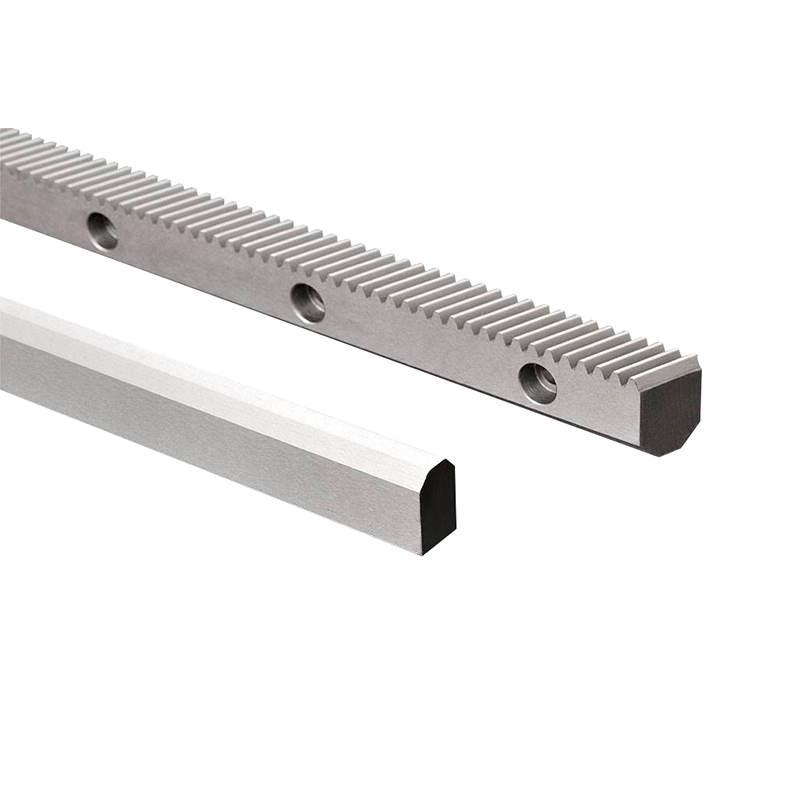
Rack profile influences more than appearance. Movement characteristics are also connected with how transmission components are arranged inside the equipment.
Linear movement depends on cooperation between the rack, mating gear, support structure, and surrounding mechanical parts. Stable engagement usually comes from the complete assembly instead of one individual component.
Several operating characteristics are commonly evaluated:
Machines performing repeated movement often benefit from careful alignment during assembly. Small installation differences may gradually influence operating smoothness over time.
Motion quality also depends on how surrounding components support the transmission path. Proper positioning allows different mechanical parts to work together throughout regular operation.
For many applications, choosing between rack profiles is less about comparing shapes and more about understanding how each design fits the overall equipment structure.
Rack selection usually begins with the machine rather than the transmission part itself. Every piece of equipment has its own layout, working rhythm, and installation conditions, so a suitable choice comes from understanding how the complete system will operate after assembly.
Several practical questions are often discussed before a rack is selected.
How much installation space is available?
What kind of movement is required?
Will routine inspection be convenient?
How does the rack fit nearby components?
Available space often shapes the whole installation plan. Some machines leave plenty of room for assembly, while others require components to fit into a compact structure. Looking at surrounding parts helps avoid unnecessary adjustment during installation.
Working conditions also deserve attention. Equipment running through long production periods may place different demands on transmission parts than machines used only from time to time. Daily operating habits often influence component selection as much as structural design.
Maintenance should not be overlooked. A rack that can be reached easily allows cleaning and inspection to become part of normal servicing instead of a difficult task carried out only after problems appear.
Choosing between different rack profiles is therefore a matter of matching the transmission component with the equipment rather than comparing shapes alone.
Production quality affects how transmission parts fit together during assembly. A rack that follows consistent manufacturing processes usually becomes easier to install because surrounding components require fewer adjustments.
Material preparation, machining, and inspection all contribute to the finished product. Each stage influences how the rack performs once it becomes part of a mechanical system.
A Round Gear Rack Manufacturer generally pays attention to several production areas.
| Production Stage | Purpose |
|---|---|
| Material preparation | Supports consistent component quality |
| Machining process | Maintains dimensional consistency |
| Surface finishing | Creates a uniform working surface |
| Product inspection | Confirms assembly requirements |
Dimensional consistency is valuable during installation. Components produced within the intended design range often fit surrounding parts with fewer corrections during assembly.
Surface condition also plays a role in daily operation. A clean and uniform finish makes inspection easier and supports regular maintenance throughout the service period.
Inspection continues through different production steps. Rather than focusing on appearance alone, manufacturers usually check dimensions, machining condition, and overall product consistency before components move into assembly.
Production quality and installation quality work together. Even a carefully manufactured rack still depends on suitable installation and routine maintenance after entering service.
Rack profile is only one part of a transmission system. Movement depends on how several mechanical parts work together rather than how one component performs by itself.
A complete transmission arrangement normally includes the rack, mating gear, mounting structure, supporting parts, and surrounding equipment. Every section influences the final operating condition.
Attention is often given to:
When one part changes, nearby components may also need adjustment. Looking at the complete assembly helps create a balanced transmission arrangement instead of treating every part as an independent unit.
Machine layout also affects the selection process. Equipment with different movement paths, mounting positions, or structural arrangements may require different rack profiles even when performing similar tasks.
Because every application has its own operating conditions, choosing a rack usually begins with the needs of the equipment instead of the appearance of the component.
Mechanical equipment continues to change as production layouts become more varied. New machine structures often create different installation requirements, giving designers more than one option when selecting transmission components.
Rack designs have gradually expanded to suit different assembly methods and equipment arrangements. Round profiles and traditional square profiles both continue to serve practical roles across different applications.
Several development directions can be seen in current mechanical design.
Equipment builders now pay closer attention to the relationship between transmission parts and the complete machine structure. Installation convenience, maintenance planning, and long-term operation are often considered together during the design stage.
A Round Rack And Pinion may be selected where its shape matches the equipment layout, while a traditional square rack remains suitable for many other mechanical structures. Neither profile replaces the other because each serves different installation needs.
As production equipment continues to evolve, rack selection is becoming more closely connected with actual working conditions. Careful planning, suitable manufacturing quality, and proper installation all contribute to a transmission system that fits the intended application and supports stable daily operation.

© 2025 Zhejiang Yuchen Transmission Technology Co., Ltd.

Transmission Gear And Rack


