

 English
 中文简体
中文简体 русский
 Español

Industry News
 +86-13306862930 / +86-18668881826
Get a Quote
+86-13306862930 / +86-18668881826
A rack and pinion system changes rotary movement into linear movement through repeated contact between the pinion teeth and the rack teeth. During continuous operation, contact occurs again and again along the working path, so small problems that might remain unnoticed during occasional use can gradually affect movement and tooth condition.
Load changes have a direct influence on wear. Smooth travel creates a different contact condition from frequent acceleration, stopping, reversing, or sudden resistance from the driven equipment. Repeated changes in force can place additional stress on the tooth surfaces, particularly when alignment or lubrication is already unsuitable.
Operating conditions around the drive matter as well. Open rack systems are exposed to surrounding air, dust, moisture, and other particles. Contamination can remain on lubricated tooth surfaces and increase friction during movement. Moisture may contribute to surface corrosion, while accumulated dirt can interfere with smooth tooth engagement.
A Precision Rack And Pinion used for continuous movement therefore needs more than accurate tooth geometry. Installation, lubrication, load, surrounding conditions, and maintenance all contribute to how the system behaves during long periods of operation.
Service life should not be viewed as a simple function of running time. A lightly loaded system operating in a clean environment may experience a different wear pattern from a heavily loaded mechanism exposed to dust and repeated direction changes. The operating condition creates the actual wear process.
Lubrication plays a central role because rack and pinion teeth make direct contact while transmitting force. A suitable lubricant creates a separating layer between contacting surfaces, reducing friction and limiting direct metal contact. Insufficient lubrication can accelerate surface wear and may increase heat during continuous movement.
Open rack systems require particular attention because lubricant is exposed to the surrounding environment rather than being contained inside a closed housing. Dust can settle on the tooth surface, while movement can gradually remove lubricant from the contact area.
Too much lubricant is not necessarily helpful. An excessive amount may collect dust and debris, creating a contaminated layer around the teeth. For continuous applications, a steady and suitable supply is more useful than occasional heavy application.
Lubrication should correspond with actual working conditions. Load, movement, surrounding temperature, exposure to contamination, and operating pattern all influence how quickly the lubricant changes or leaves the contact area.
A practical maintenance approach includes:
Regular inspection helps prevent a lubrication problem from developing into tooth surface damage. A system that runs continuously may require closer attention than equipment that moves only occasionally.
Alignment determines how the pinion meets the rack during movement. When both parts remain correctly positioned, contact can spread more evenly across the working tooth area. A mounting error can shift contact toward one side, creating a concentrated wear area.
Misalignment may develop during installation or appear later as mounting components loosen, rack sections shift, or surrounding structures move under load. Long rack assemblies can require particular attention at the joints because even a small change in position can affect tooth engagement along the travel path. Installation guidance for rack systems places emphasis on parallel positioning and careful alignment between connected rack sections.
Wear patterns can provide useful clues. A tooth surface showing noticeably greater wear on one side may indicate that contact is not evenly distributed. Increasing backlash, unusual noise, or irregular movement can provide additional signs that the relationship between rack and pinion has changed.
Alignment should therefore be checked as part of maintenance rather than treated as a one‑time installation task. A mounting surface may appear stable while small positional changes gradually influence the contact area.
Load determines how much force passes through the teeth during movement. A rack and pinion carrying a steady load experiences a different working condition from one that repeatedly starts, stops, reverses, or encounters changing resistance.
Continuous operation can make load changes particularly relevant because every movement adds another contact cycle. When force becomes concentrated over a small portion of the tooth surface, local wear can develop more quickly.
Sudden loading deserves attention as well. A moving mechanism may encounter resistance from a poorly positioned component, an obstruction, or a change in the driven load. Such events can produce a short period of higher force at the tooth contact.
Selection should therefore consider actual operating behavior rather than only the normal load. A system intended for smooth movement may require a different arrangement from one subjected to frequent starts, stops, and direction changes.
Proper installation can help keep the applied force within the intended path. Alignment, mounting stability, and tooth contact all influence how effectively the load is transferred between the rack and pinion.
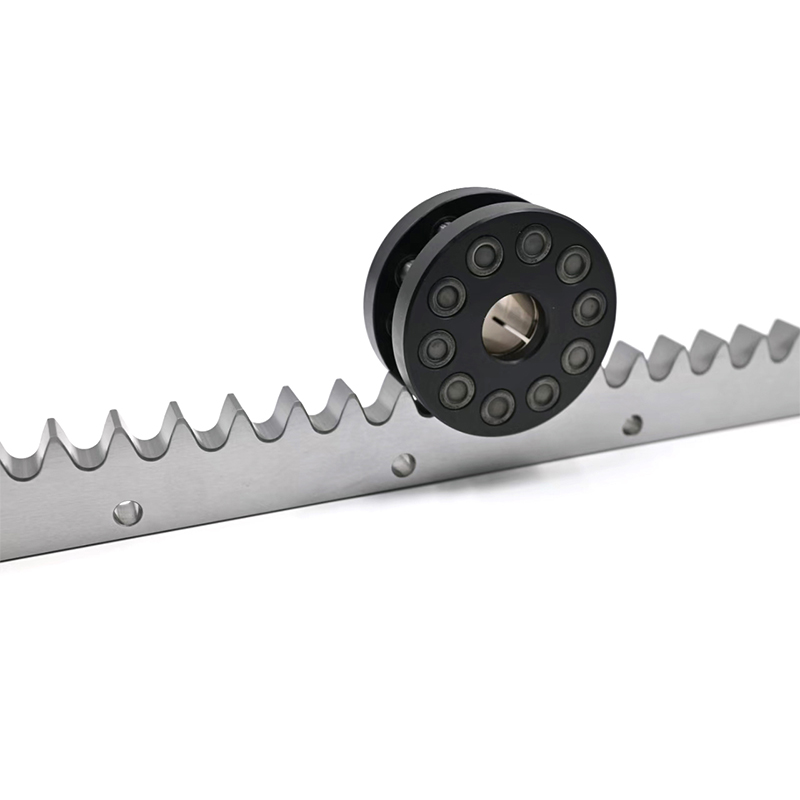
Tooth contact affects both movement quality and wear distribution. A suitable contact relationship allows force to pass between the two parts without placing unnecessary pressure on a small edge or corner.
Backlash has a role in movement as well. Excessive clearance can create noticeable play during direction changes, while insufficient clearance can make movement more difficult and increase contact pressure. A suitable relationship depends on the mechanical arrangement and intended operation.
Changes in tooth contact can appear gradually. Noise may increase, movement may become less even, or positioning may change during repeated travel. A sudden change can indicate contamination, mounting movement, tooth damage, or another mechanical problem.
For a Precision Rack And Pinion, maintaining stable contact is particularly important because repeated movement can magnify small installation or maintenance issues. Correct positioning of the rack and pinion allows the tooth surfaces to work together across the intended travel range.
Different rack structures suit different mechanical arrangements. A Spur Rack And Pinion uses a straight rack form that engages with a matching pinion, making the arrangement suitable for linear movement where the rack can be mounted along a relatively straightforward path.
A Round Rack And Pinion uses a rounded rack structure and can provide a different mounting arrangement where the available space or mechanical layout calls for a cylindrical form. Selection depends on how the rack needs to be positioned, supported, and connected with the moving mechanism.
Neither structure should be selected from appearance alone. Load direction, available mounting space, travel arrangement, alignment requirements, and environmental conditions all need consideration.
The structural difference can affect maintenance as well. Rack accessibility determines how easily tooth surfaces can be inspected and lubricated. A location that is difficult to reach may require more attention during installation so later maintenance does not become unnecessarily difficult.
For continuous‑use equipment, the relationship between structure and working environment matters more than simply choosing a familiar rack shape.
A rack and pinion rarely operates in a completely isolated space. Dust, moisture, metal particles, cleaning residue, and other materials can reach exposed tooth surfaces during normal operation. Once foreign particles mix with lubricant, the contact condition may change, causing additional friction and surface wear.
Moisture creates another concern. Exposed steel surfaces can develop corrosion when moisture remains around the teeth for long periods. Corroded areas may become rougher, changing the way the teeth engage during movement. A damp working area therefore calls for closer inspection, particularly around exposed sections and rack joints.
Temperature changes can affect lubricant behavior as well. A lubricant that remains suitable under one operating condition may behave differently when the surrounding temperature changes significantly. Changes in consistency can influence how well the lubricant stays on the working surfaces.
Cleanliness around the drive path should therefore form part of routine maintenance. Removing loose particles before they reach the tooth contact area can reduce unnecessary contamination. Protective covers may help in environments where airborne dust or liquid is difficult to avoid, provided the cover does not interfere with movement or maintenance access.
Installation establishes the physical relationship between the rack and pinion. A rack that is not positioned correctly may create uneven tooth contact from the beginning, even when the components themselves are in good condition.
Mounting surfaces need suitable support along the rack length. When several rack sections are connected, each joint needs to remain properly positioned so tooth engagement does not change as the pinion travels from one section to another.
Fasteners influence stability as well. Loose mounting points can allow a rack to move under repeated loading, gradually changing the contact relationship. Regular vibration can make such movement harder to notice until wear becomes visible.
Installation checks can focus on several practical areas:
A careful installation reduces the chance of correcting the same alignment problem repeatedly during later operation. Maintenance work becomes easier when the original mounting arrangement is stable and accessible.
Wear rarely develops without some change in operating behavior. Noise, movement, tooth appearance, and lubricant condition can provide useful information before a mechanical problem becomes severe.
Uneven tooth wear deserves attention. A noticeably worn area on one side of a tooth may suggest uneven contact or a change in alignment. Increasing backlash can indicate changes around the tooth surfaces or mounting arrangement.
Unusual noise can come from several sources, so sound alone does not identify a specific problem. A change that appears together with irregular movement or visible tooth damage provides a stronger reason for inspection.
Several conditions are worth checking during routine maintenance:
Inspection does not need to wait until movement becomes difficult. Small changes can provide useful information about how the system is wearing and whether operating conditions remain suitable.
Long‑term operation depends on keeping several conditions stable at the same time. Lubrication needs to remain suitable, mounting needs to stay secure, and the tooth contact needs to remain consistent throughout the working path.
A maintenance routine can follow the actual working environment rather than using one fixed approach for every installation. Equipment exposed to dust may need more frequent cleaning, while equipment operating in a clean enclosure may require less attention to contamination.
Load changes should remain part of routine observation. A mechanism that begins moving more heavily, stopping less smoothly, or producing unusual vibration may place different forces on the rack and pinion.
Good maintenance practices can include:
A consistent inspection process can help identify changes while the affected area remains manageable. Replacing or adjusting a component only after severe tooth damage has developed may involve more work than correcting a mounting or lubrication issue at an earlier stage.
Selecting a rack and pinion for continuous movement requires attention to the complete working environment. Tooth form matters, yet it represents only one part of the mechanical arrangement.
| Factor | Main Concern | Possible Effect on Service |
|---|---|---|
| Load | Force transferred through the teeth | Surface wear |
| Lubrication | Friction and contact condition | Tooth condition |
| Alignment | Position of tooth contact | Uneven wear |
| Environment | Dust, moisture, and temperature | Contamination or corrosion |
| Installation | Rack position and mounting | Contact stability |
| Duty Pattern | Continuous movement and load changes | Wear accumulation |
A Precision Rack And Pinion may be considered when accurate and stable linear movement forms part of the equipment design. Practical selection still needs to reflect the actual load, mounting arrangement, travel direction, operating environment, and maintenance access.
A Spur Rack And Pinion can suit a straightforward linear transmission arrangement where the rack is mounted along a suitable flat path. A Round Rack And Pinion may be considered when a rounded rack form fits the available structure or installation layout.
The surrounding equipment should guide the decision. A rack exposed to dust needs different maintenance attention from one enclosed within a cleaner working area. A mechanism with frequent reversing may experience different tooth loading from one moving steadily in a single direction.
Continuous use makes small differences easier to notice over time. Lubrication condition, alignment, load changes, contamination, and mounting stability can gradually influence tooth surfaces and movement quality. Keeping those conditions under control helps the rack and pinion continue operating within the intended mechanical arrangement.
For maintenance teams, observing how movement changes can be as useful as checking the physical teeth. Increasing play, uneven travel, new noise, or changes in lubricant condition can indicate that an inspection is needed. Early attention allows the cause to be considered before wear spreads across a larger section of the drive path.

© 2025 Zhejiang Yuchen Transmission Technology Co., Ltd.

Transmission Gear And Rack


