

 English
 中文简体
中文简体 русский
 Español

Industry News
Home / News / Industry News / Whether a Round Rack and Pinion Generates Different Vibration Patterns
 +86-13306862930 / +86-18668881826
A rack and pinion changes rotary movement into linear movement, so vibration behavior depends on more than the rotation of the small gear. Tooth contact, rack support, mounting position, load, and movement direction can all influence how forces travel through the assembly.
A Round Rack And Pinion brings another consideration because a round rack may have some freedom to move or rotate according to its support arrangement. Research on round rack systems has shown that rack behavior and tooth contact can influence displacement and load distribution during engagement.
Vibration may therefore appear as a steady pattern during continuous travel, a change that follows rack position, or a disturbance that becomes noticeable during acceleration and direction changes. Such behavior does not automatically indicate a defect. Mechanical systems naturally produce small force changes as teeth enter and leave contact.
A useful way to view the problem is to consider four connected areas:
Once those factors are considered together, differences in vibration become easier to trace.
A conventional rack and pinion uses a rotating pinion to push the rack along a linear path. A round rack changes part of the mechanical arrangement because its cylindrical body can be supported in a way that allows some movement around its own axis. Such movement depends on the surrounding structure and how the rack is held in position.
During operation, tooth contact does not remain completely static. As the pinion rotates, one tooth approaches engagement, transfers force, and then moves away as another tooth takes over. Small variations in contact position can produce changes in transmitted force.
For a round rack, support conditions can add another layer to the motion. A rack that is pressed toward the pinion or supported with some freedom can respond differently from a rigidly fixed rack. Research into steering rack systems has specifically examined rack displacement, rack rotation, and contact on different tooth surfaces because such behavior affects meshing.
A simple movement sequence can be viewed as:
Every stage can contribute to the final vibration pattern.
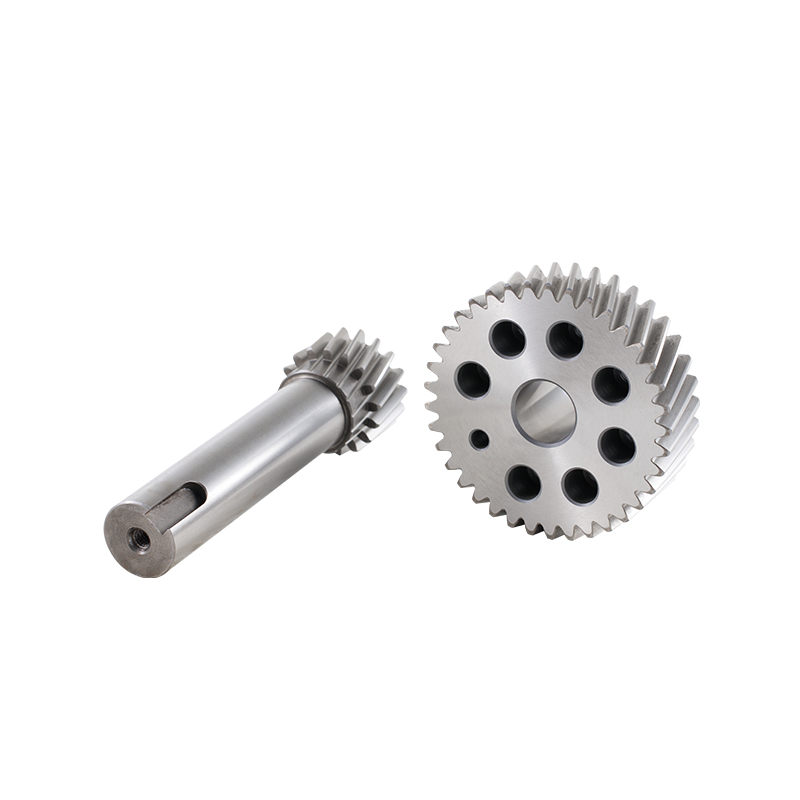
Tooth contact is where rotary force becomes linear movement, so small changes at the contact area can travel through the entire mechanism. A smooth transition between teeth generally produces a more even transfer of force, while uneven contact can create local changes in loading.
Manufacturing condition plays a role here. Tooth shape, spacing, surface condition, and rack straightness can influence how mating surfaces meet. Mounting accuracy matters as well because a correctly produced rack can still develop uneven contact when installed out of alignment. Engineering guidance on rack systems identifies alignment and positioning as important factors in proper meshing and load transfer.
Contact can also change along the length of a rack. A small difference in mounting position may cause one section to engage differently from another, creating vibration that changes according to travel position rather than remaining constant.
For maintenance work, observing when vibration appears can therefore provide useful clues. A disturbance that follows a particular section of travel may point toward contact or alignment conditions, while a vibration that remains similar across the full movement range may require attention to another part of the drive system.
Yes, different operating conditions can produce different vibration patterns. A round rack may respond to tooth engagement, support movement, and changing load in ways that are not identical to a rigid rack arrangement.
A useful distinction can be made between position-related vibration and operation-related vibration.
Position-related vibration changes as the pinion travels along the rack. A particular section may have slightly different tooth contact, mounting condition, or surface behavior. When the pinion passes that section, the vibration can become noticeable and then reduce again.
Operation-related vibration follows a change in speed, load, or movement direction. A drive that runs quietly during steady travel may behave differently during acceleration or reversal because forces inside the mesh change.
Research on rack-and-pinion drives also links transmission errors with periodic position differences that can produce vibration excitation.
| Vibration Observation | Possible Area to Check |
|---|---|
| Changes along rack travel | Rack surface or mounting condition |
| Appears during reversal | Tooth clearance or lost motion |
| Changes with load | Tooth contact or support stiffness |
| Appears around one section | Local alignment or surface variation |
| Continues through full travel | Drive, support, or rotating components |
Such observations should not be treated as a direct diagnosis. Several mechanical sources can produce similar sensations, so vibration needs to be considered together with sound, movement quality, tooth contact, and installation condition.
Backlash refers to the small clearance between mating tooth surfaces. Some clearance is needed because completely eliminating the gap can create interference, while excessive clearance can allow unwanted movement between the teeth.
During steady movement in one direction, the drive may remain in contact with one side of the tooth profile. When rotation reverses, the pinion needs to cross the available clearance before force transfers to the opposite side.
A larger gap can make that transition more noticeable. The tooth surfaces may meet with a small impact, producing noise or vibration during reversal. Engineering sources also associate backlash with lost motion and changes in dynamic behavior.
Too little clearance creates a different concern. Tooth surfaces may interfere as manufacturing or mounting variation changes along the travel path. Proper adjustment therefore involves a balance between free movement and smooth engagement.
For a Round Rack And Pinion, backlash may also interact with rack support and movement. A rack with some freedom to rotate can respond differently during load changes compared with a rack held firmly against rotation.
A helical gear rack and pinion uses angled teeth rather than a straight tooth arrangement. Tooth engagement develops progressively along the contact area, which changes how force enters and leaves the mesh.
Such progressive engagement can influence vibration behavior because force transfer is spread through the tooth interaction rather than changing at exactly the same instant across the full tooth width. A rack and pinion model can represent both spur and helical arrangements, with tooth direction affecting the contact relationship and force path.
Helical teeth also introduce forces in more than one direction, so the surrounding support needs to accommodate the resulting load. Mounting stiffness, bearing support, and rack guidance can therefore affect the practical vibration response.
Comparison between straight and helical arrangements should not focus only on tooth shape. A complete assessment needs to consider:
Different designs can therefore produce different vibration characteristics even when they perform the same basic task of converting rotation into linear movement.
A rack can be manufactured with suitable tooth geometry and still show uneven movement when installation changes the way teeth meet. Alignment determines how force travels from the pinion into the rack, so even a small mounting difference can alter contact along the working path.
Parallel position matters when a rack is guided beside a moving pinion. An offset can push contact toward one side of the tooth surface, leaving less even loading across the available area. As the pinion moves, contact may then shift from one region to another, producing a vibration pattern that changes with position.
Mounting surfaces also deserve attention. Uneven support can cause a rack to move slightly under load, especially when surrounding structures are not rigid enough for the application. Such movement may change tooth engagement and create a repeating disturbance during travel.
A useful inspection sequence can include:
Alignment should be considered together with rack support rather than as an isolated measurement. Research into rack systems has examined rack displacement and contact behavior under different mounting and loading conditions, showing how structural movement can influence tooth engagement. (jtekt.co.jp)
A rack does not work alone. Guides, mounting brackets, bearings, shafts, frames, and nearby machine structures all influence how mechanical forces are absorbed and transferred.
A rigid support can hold the rack in a stable position during loading. A more flexible support may allow slight movement, which can change contact pressure between mating teeth. Such movement may not be visible during normal observation, yet vibration can reveal a repeated response.
Support conditions can also affect sound. A small tooth-contact disturbance may be amplified when surrounding parts act like a resonating structure. In another installation, similar tooth movement may produce a less noticeable response because surrounding components absorb part of the energy.
For that reason, vibration should not automatically be assigned to the rack or pinion itself. A complete check can consider:
| Area | Possible Influence on Vibration |
|---|---|
| Rack support | Allows or restricts rack movement |
| Pinion shaft | Influences rotational stability |
| Mounting frame | Transfers mechanical vibration |
| Guide structure | Controls rack position |
| Bearing support | Affects shaft movement |
| Tooth contact | Changes transmitted force |
Such relationships are especially relevant when a new rack is installed in an existing machine. The surrounding structure may have its own movement characteristics that affect the final result.
A rack and pinion does not always experience the same force during operation. Load can increase when a mechanism moves against resistance, accelerates a heavy assembly, or changes direction.
As load changes, tooth contact pressure changes as well. A contact area that remains quiet during light movement may become more noticeable under heavier loading. Support structures can also deflect slightly, changing the position of the rack relative to the pinion.
Direction changes deserve particular attention. During reversal, backlash is crossed before force transfers to the opposite side of the tooth. A larger clearance can make the transition more noticeable, especially when the moving parts change direction quickly. (kamo.co.jp)
Load-related vibration can therefore be observed through changes in:
A useful observation does not rely on one operating condition. Comparing steady travel, acceleration, deceleration, and reversal can help separate load-related behavior from problems that remain present throughout the movement.
For a Round Gear Rack Manufacturer, vibration-related quality begins before the rack reaches the machine. Tooth geometry, rack shape, surface condition, and mounting references all influence how the finished component interacts with its matching pinion.
Production inspection can consider several areas. Tooth spacing needs to remain consistent along the working section, while the rack body needs suitable dimensional stability. Surface marks or machining irregularities may also affect contact.
Straightness is important for a rack intended to follow a controlled path. A small change in rack position along its length can alter the relationship between tooth surfaces and the pinion.
Production checks may include:
Material selection also connects with manufacturing behavior. Different materials respond differently to cutting, heat treatment, finishing, and environmental exposure. Such factors can influence the final tooth condition.
Inspection should not stop at individual dimensions. How the rack performs when paired with its pinion is equally relevant. A component may meet individual measurements while still producing uneven contact when installed.
Vibration diagnosis becomes easier when the timing and location of the disturbance are recorded. A vibration that appears only near one section of the rack points toward a different area of investigation from a vibration that remains unchanged throughout travel.
Movement position provides a useful clue. Marking the point where vibration begins can help determine whether the issue follows a particular rack section. Repeating the movement in the opposite direction can provide another comparison.
Speed can offer another clue. A vibration that changes significantly with movement speed may have a different source from one that remains tied to a fixed rack position.
A simple observation process can include:
During inspection, tooth contact marks can provide useful visual information. Uneven marks may indicate that force is not being shared evenly across the intended contact area. Mounting alignment and support condition should then be checked before changing the rack or pinion itself.
Lubrication condition can also influence movement resistance and noise. Insufficient or unsuitable lubrication may increase friction between contacting surfaces, while contamination can change the way teeth move against one another.
Surrounding components need attention as well. Bearings, shafts, couplings, guides, and drive motors can generate vibration that travels into the rack assembly. Separating those sources prevents unnecessary changes to a correctly functioning gear pair.
A rack design should be considered according to the machine in which it will operate. Tooth direction, rack shape, support method, load direction, and installation arrangement all influence mechanical behavior.
A straight tooth arrangement and a helical gear rack and pinion can transmit movement through different contact patterns. Helical teeth engage progressively, while straight teeth have a different contact sequence. Surrounding support needs to accommodate the forces produced by each arrangement.
A round rack also introduces its own design considerations. Rack support, possible rotation, and contact position can influence how force is distributed. Research into round rack mechanisms has examined how rack rotation can affect contact behavior and load distribution. (jtekt.co.jp)
When comparing designs, several questions can guide the assessment:
A design that works in one mechanical arrangement may behave differently after being installed in another structure. Machine layout therefore remains part of the gear selection process.
Vibration can change as mechanical surfaces wear, mounting conditions shift, or operating loads vary. Tooth contact may become less even after prolonged use, while loosened supports can alter the position between the rack and pinion.
Regular inspection can help identify gradual changes before movement becomes difficult to control. Contact marks, unusual noise, increased clearance, or changes in movement smoothness can all provide useful signs.
For a Round Rack And Pinion, rack support deserves continued attention because contact conditions can depend on both tooth geometry and the way the cylindrical rack is held. A change in support may influence rack position and therefore alter tooth engagement.
A Round Gear Rack Manufacturer also needs to consider how production consistency affects service behavior. Tooth spacing, surface condition, rack geometry, and mounting references all contribute to the way a finished component interacts with its mating gear.
Vibration patterns are therefore connected with a chain of mechanical conditions rather than one single factor. Tooth contact, backlash, load, alignment, support, lubrication, and surrounding components can all influence what an operator hears or feels during movement.
When a helical gear rack and pinion is used, angled tooth engagement introduces another contact pattern and another set of forces for the support structure to manage. Comparing rack arrangements requires attention to the complete mechanical system rather than tooth shape alone.
A careful approach starts with observation and then moves toward contact, alignment, support, and operating conditions. Such a process helps distinguish normal movement-related vibration from changes that may deserve closer mechanical inspection.

© 2025 Zhejiang Yuchen Transmission Technology Co., Ltd.

Transmission Gear And Rack


