+86-13306862930 / +86-18668881826

Get a Quote
+86-13306862930 / +86-18668881826
Mechanical systems often depend on controlled motion, and the structure of a Helical Gear Rack introduces a distinctive approach compared with traditional straight tooth formats. Instead of teeth aligned perpendicular to the rack length, helical teeth follow an angled path. This geometry allows engagement to begin gradually rather than all at once.
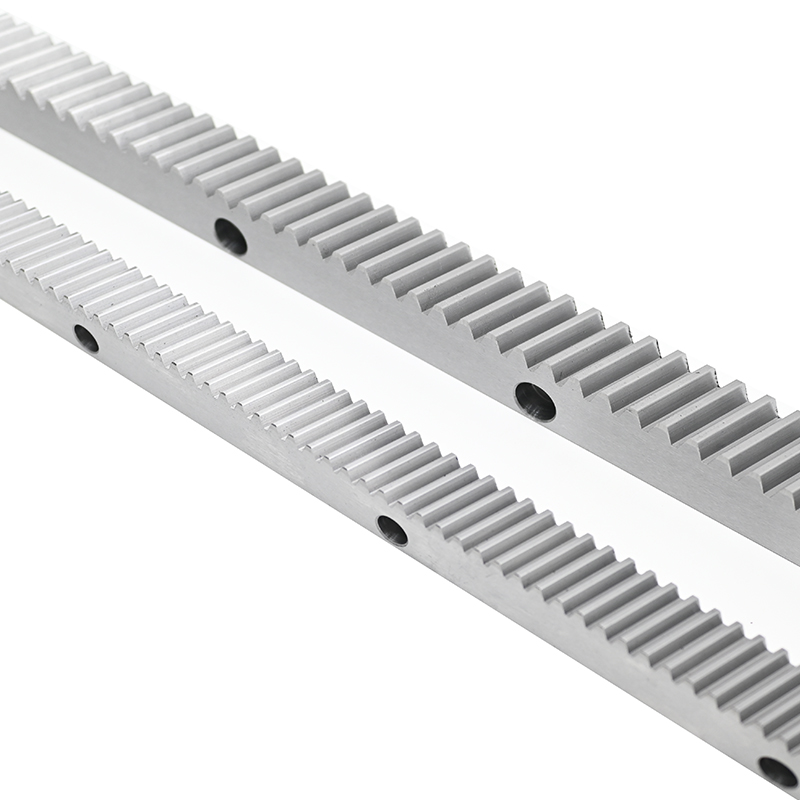
Gradual tooth contact can support steadier transmission behavior, which many equipment designers consider when refining motion assemblies. The angled layout also spreads contact across multiple points, shaping how force travels through the mechanism during operation.
Because of these characteristics, helical racks frequently appear in equipment where directional stability and consistent travel matter.
Industrial environments increasingly incorporate motion components capable of supporting repeated positioning cycles. A Helical Gear Rack often becomes part of automated handling equipment, cutting machinery, and transport platforms that require guided movement.
Warehousing infrastructure offers another example. As fulfillment networks expand, positioning systems help coordinate material flow across large facilities. Angled tooth racks can align with these workflows by supporting measured travel across extended distances.
Even specialized machinery, such as large-format fabrication tools, may integrate helical racks when designers seek smoother mechanical transitions.
Tooth angle shapes how gears interact with racks. When engineers specify a Helical Gear Rack, they typically review helix angle alongside module size to align the component with torque expectations and travel speed.
A larger angle may distribute load differently than a smaller one, influencing how force transfers between mating parts. Matching these details with operational goals helps maintain predictable movement patterns.
Design teams often analyze how the rack integrates with motor systems, since coordinated geometry supports balanced rotational conversion into linear travel.
Material planning frequently reflects both workload and environmental exposure. Hardened steel remains widely referenced because it supports structural rigidity under repeated engagement cycles.
A supplier offering a Helical Gear Rack may also provide alloy variants or surface-treated metals designed to handle demanding conditions. Treatments modify outer layers, shaping how the rack responds to friction while maintaining internal strength.
For projects where weight enters the equation, engineers sometimes explore alternative metals that balance mass with mechanical resilience.
Accurate machining helps maintain tooth alignment across the entire rack length. Within production facilities, digitally guided cutting equipment supports repeatable geometry that matches engineering drawings.
When producing a Helical Gear Rack, technicians often monitor pitch consistency and helix accuracy. These details influence how smoothly the pinion engages during travel.
Measurement systems compare finished parts against defined tolerances, supporting uniform batches that integrate more easily into mechanical assemblies.
As industrial layouts expand, extended travel distances have become more common. A modular Helical Gear Rack allows multiple sections to connect, forming a continuous path for motion systems.
This approach supports flexibility during installation because equipment builders can adapt rack length to match machine scale. Alignment features typically help maintain consistent tooth spacing where segments meet.
Long-format racks often appear in gantry structures and large positioning tables where guided movement spans several meters.
Thermal processing influences how metal behaves during repeated contact. Manufacturers frequently apply controlled heating cycles to strengthen the rack surface while preserving core toughness.
For a Helical Gear Rack, this balance helps the teeth handle ongoing engagement without rapid deformation. Engineers reviewing specifications often consider treatment depth and hardness range when aligning components with workload expectations.
Understanding these processes can clarify how motion hardware may perform across extended production periods.
Automation continues reshaping factory layouts, introducing equipment that depends on synchronized movement. A Helical Gear Rack can complement these systems by supporting measured positioning within robotic or guided frameworks.

© 2025 Zhejiang Yuchen Transmission Technology Co., Ltd.

Transmission Gear And Rack



 English
 中文简体
中文简体 русский
 Español